

Food Identity Card
| Attribute | Details |
|---|---|
| Local Name | Muthokoi |
| Alternative Names | Dehulled Maize; Shelled Maize |
| Food Category | Traditional cereal food |
| Community(ies) | Kamba, Embu, Mbeere, Tharaka, Meru, Kikuyu |
| Region | Eastern Kenya and parts of Central Kenya |
| Country of Origin | Kenya |
| Primary Ingredients | Dry maize kernels, water |
| Preparation Method | Dehulling, washing, boiling, steaming or further cooking |
| Typical Meal | Main meal, breakfast, lunch or dinner |
| Commercial Availability | Limited; available in some supermarkets and local markets |
| Commercial Potential | Very High |
| Food Safety Risk | Low when prepared hygienically |
Overview
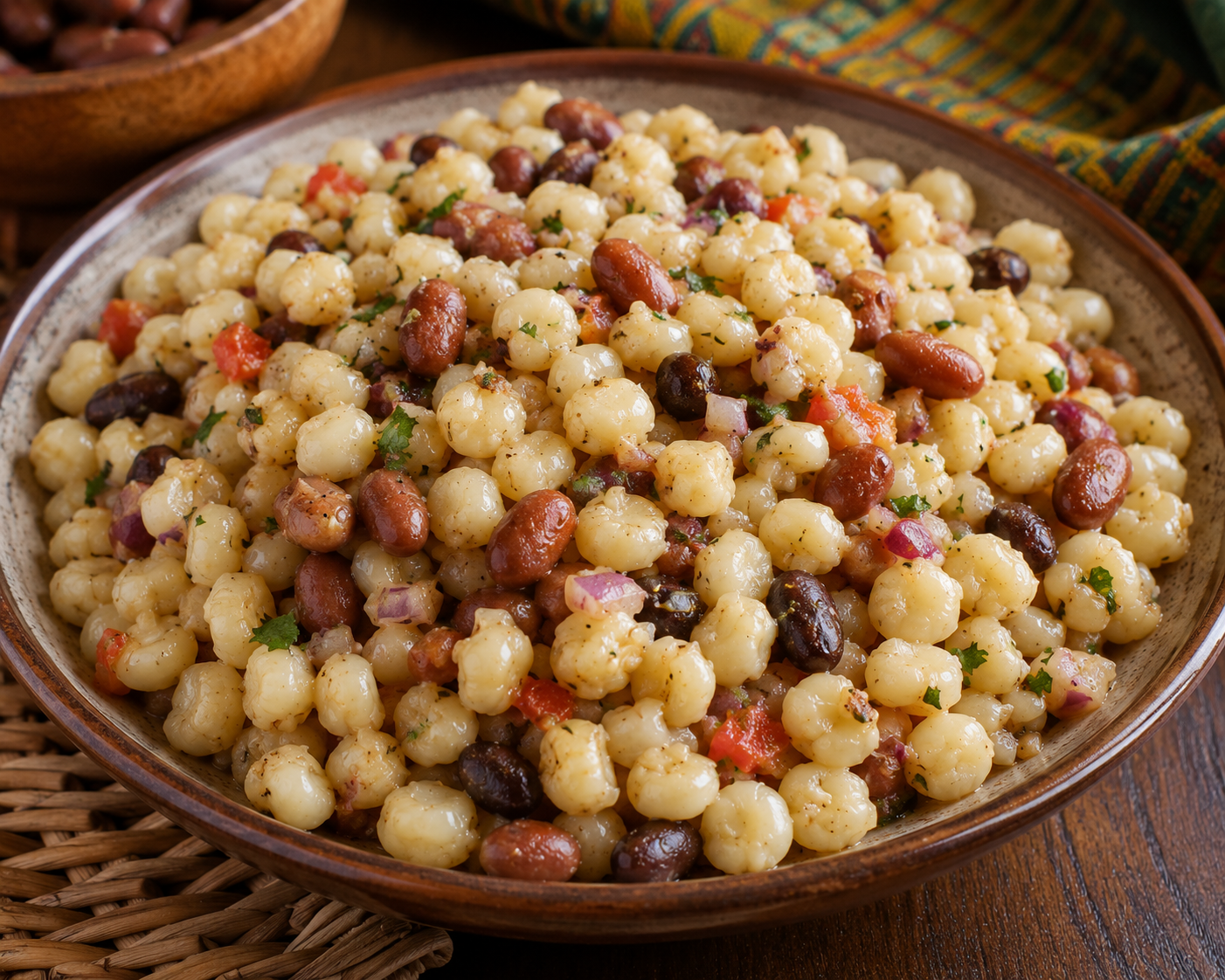
Muthokoi is a traditional Kenyan food prepared from whole maize grains that have been manually or mechanically dehulled to remove the pericarp (outer seed coat) and germ before cooking. The process produces clean, white maize kernels that cook faster, have a softer texture, and are easier to digest than whole maize.
For generations, Muthokoi has been a staple food among several communities in Eastern and Central Kenya. Although recipes differ slightly from one community to another, the underlying processing method remains remarkably similar. Today, Muthokoi continues to be enjoyed in homes, schools, restaurants, and increasingly in urban centres where consumers seek traditional, healthy foods.
History and Origin
The exact origin of Muthokoi is unknown, but oral traditions indicate that it has been prepared for centuries among the Kamba, Meru, Embu, Mbeere, Tharaka, and Kikuyu communities.
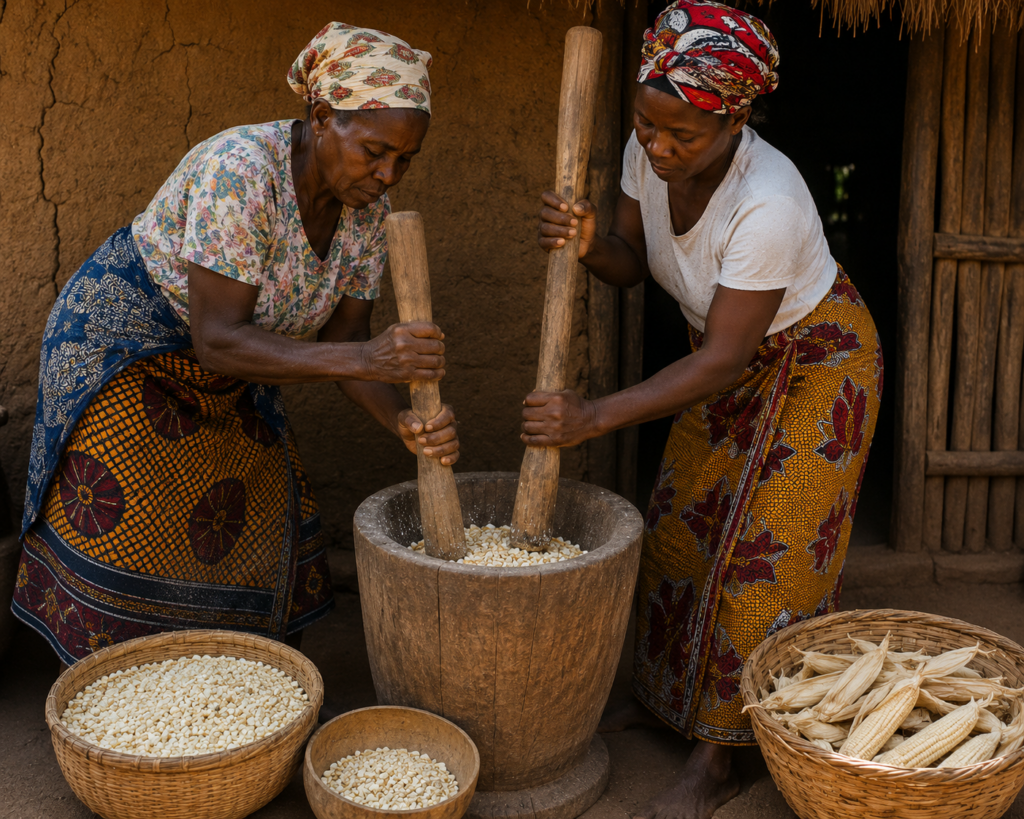
Traditionally, women dehulled maize using a large wooden mortar and pestle. The pounding removed the tough outer bran, after which the kernels were repeatedly washed to remove the loosened hulls before cooking.
The process was labour-intensive but highly valued because it improved cooking quality and reduced cooking time. As maize became Kenya’s dominant staple crop, Muthokoi evolved into one of the region’s most important indigenous foods.
Today, mechanical dehullers have replaced much of the manual pounding, making the product more widely available.
Traditional Ingredients
Essential Ingredients
- Dry maize kernels
- Clean water
Optional Ingredients
- Beans
- Cowpeas
- Green grams
- Pigeon peas
- Salt
- Cooking oil or animal fat
- Onions
- Tomatoes
- Indigenous vegetables
- Milk (occasionally served alongside)
Traditional Equipment
Historically
- Wooden mortar
- Wooden pestle
- Winnowing tray
- Earthen cooking pot
- Three-stone fireplace
Modern
- Mechanical maize dehuller
- Stainless steel cooking pot
- Pressure cooker
- Gas or electric cooker
Step-by-Step Preparation
Step 1: Selection of Maize
Mature, clean and insect-free maize kernels are selected.
Step 2: Dehulling
The maize is pounded in a mortar or passed through a mechanical dehuller to remove the bran and germ.
Step 3: Washing
The dehulled maize is washed several times to remove the loosened bran.
Step 4: Soaking (Optional)
Some households soak the kernels overnight to shorten cooking time.
Step 5: Cooking
The maize is boiled in sufficient water until tender. Depending on the variety and processing method, cooking may take between one and three hours.
Step 6: Serving
Muthokoi may be served plain or mixed with legumes, vegetables, meat, milk, or traditional sauces.
Variations
Different communities prepare Muthokoi differently.
- Plain boiled Muthokoi
- Muthokoi with beans
- Muthokoi with green grams
- Muthokoi with pigeon peas
- Fried Muthokoi with onions and tomatoes
- Muthokoi served with indigenous vegetables
- Muthokoi mixed with meat
- Muthokoi prepared using pressure cooking
Cultural Importance
Muthokoi is regarded as an everyday household food but is also prepared during communal labour activities, family gatherings, and periods of harvest.
In many homes, it symbolizes hospitality, simplicity, and self-reliance. Preparing Muthokoi traditionally brought family members together during the dehulling process, reinforcing social bonds and the transfer of indigenous knowledge.
Nutritional Profile
Muthokoi is an excellent source of:
- Complex carbohydrates
- Dietary fibre (reduced compared with whole maize)
- Plant protein
- Iron
- Magnesium
- Zinc
- B vitamins
When combined with legumes such as beans or pigeon peas, its protein quality is significantly improved through complementary amino acids.
Food Science
Dehulling removes much of the maize bran and germ, producing kernels that:
- Cook more quickly
- Have a softer texture
- Possess improved sensory acceptability
- Exhibit lower lipid content because much of the germ is removed
However, dehulling also reduces some dietary fibre, essential fatty acids, vitamins, and minerals concentrated in the bran and germ.
Food Safety
Potential hazards include:
- Aflatoxin contamination if poor-quality maize is used
- Insect infestation during storage
- Microbial contamination from unsafe water
- Poor hygiene during processing
- Post-cooking contamination
Safe preparation requires:
- Using high-quality maize
- Proper washing
- Adequate cooking
- Hygienic handling
- Safe storage after cooking
Reported Food Safety Issues
Although Muthokoi itself has rarely been associated with foodborne outbreaks, the maize used to prepare it may contain aflatoxins if improperly dried or stored before processing. Good agricultural and storage practices remain essential to ensure product safety.
Commercialization Potential
Muthokoi has considerable commercial potential because:
- It is already culturally accepted.
- Preparation is straightforward.
- Mechanical dehulling enables large-scale production.
- Demand for traditional foods is increasing.
- It can be marketed as a healthy convenience food.
- It is suitable for institutional feeding and restaurants.
- It has export potential for Kenyan diaspora markets.
Market Status
Today, Muthokoi can be found:
- In local markets throughout Eastern Kenya.
- In selected supermarkets.
- In traditional restaurants.
- In school and institutional kitchens.
- In packaged form by small and medium-scale processors.
Despite its popularity, national commercialization remains limited compared with foods such as rice or maize flour.
Sustainability
Muthokoi contributes to sustainable food systems by:
- Promoting indigenous food traditions.
- Supporting local maize farmers.
- Encouraging household food security.
- Reducing reliance on highly processed foods.
- Preserving traditional food knowledge.
Economic Importance
Production and sale of Muthokoi provide income opportunities for:
- Smallholder farmers
- Women’s groups
- Community milling enterprises
- Food vendors
- Local retailers
Its commercialization could create additional employment in processing, packaging, and distribution.
Current Challenges
- Declining preparation in urban households.
- Loss of traditional processing knowledge.
- Long cooking times.
- Competition from highly processed foods.
- Limited branding and packaging.
- Inadequate value addition.
Future Opportunities
- Ready-to-cook packaged Muthokoi.
- Ready-to-eat meals.
- Vacuum-packed products.
- Institutional food markets.
- Export to international markets.
- Integration into healthy diet campaigns.
Research Gaps
Future research could explore:
- Nutritional changes during dehulling.
- Consumer preferences.
- Improved processing technologies.
- Shelf-life extension.
- Packaging innovations.
- Aflatoxin mitigation strategies.
- Climate-resilient maize varieties suitable for Muthokoi production.
- Glycaemic index and health impacts.
Interesting Facts
- Traditionally, dehulling maize was considered a communal activity.
- Mechanical dehullers have greatly reduced the labour required to prepare Muthokoi.
- Although often viewed as a simple food, Muthokoi remains an important symbol of cultural identity in several Kenyan communities.
- The food has significant potential for value addition and wider commercialization.
References
- Ekpa, O., Palacios-Rojas, N., Kruseman, G., Fogliano, V., & Linnemann, A. R. (2019). Sub-Saharan African maize-based foods: Processing practices, challenges and opportunities. Food Reviews International, 35(7), 609–639. https://doi.org/10.1080/87559129.2019.1588290
- Government of Kenya & Food and Agriculture Organization of the United Nations (FAO). (2018). Kenya Food Composition Tables 2018. Nairobi, Kenya: Ministry of Health & FAO. https://openknowledge.fao.org/handle/20.500.14283/i8897en
- Kenya Agricultural and Livestock Research Organization (KALRO). (2016). KALRO-KCEP Maize Training and Extension Manual. Nairobi, Kenya: KALRO. https://kalroerepository.kalro.org/handle/123456789/13966
- Kilonzo, R. M., Imungi, J. K., Muiru, W. M., Lamuka, P. O., & Njage, P. M. K. (2014). Household dietary exposure to aflatoxins from maize and maize products in Kenya. Food Additives & Contaminants: Part A, 31(12), 2055–2062. https://doi.org/10.1080/19440049.2014.976595
- Maina, M. W. (Year). Efficacy of Muthokoi pounded with green leafy vegetables in improving the vitamin A status using rats (Master’s thesis, University of Nairobi). University of Nairobi eRepository. https://erepository.uonbi.ac.ke/handle/11295/96317
- Ministry of Health, Kenya. (2018). Kenya Recipe Book 2018. Nairobi, Kenya: Ministry of Health.
- Mutungi, C. M. (2006). Effects of dehulling maize grains and treatment with chemical additives on the levels of aflatoxins during Muthokoi making and preparation (Master’s thesis, University of Nairobi). https://erepository.uonbi.ac.ke/handle/11295/19182
- Mutungi, C., Lamuka, P., Arimi, S., Gathumbi, J., & Onyango, C. (2008). The fate of aflatoxins during processing of maize into Muthokoi – A traditional Kenyan food. Food Control, 19(7), 714–721. https://doi.org/10.1016/j.foodcont.2007.07.011
- Omara, T., Kiprop, A. K., Wangila, P., Wacoo, A. P., Kagoya, S., Nteziyaremye, P., Peter, N., Kiwanuka Nakiguli, C., Baker Obonge, M., & Adupa, E. (2021). The scourge of aflatoxins in Kenya: A 60-year review (1960–2020). Journal of Food Quality. https://doi.org/10.1155/2021/8899839
- Republic of Kenya & Food and Agriculture Organization of the United Nations (FAO). (2019). Kenya Food Composition Tables. FAO Food Composition Database. https://www.fao.org/food-composition/tables-and-databases/detail/kenya-food-composition-tables/en
- Republic of Kenya, Ministry of Health. (2018). Kenya Food Composition Tables. Nutrition and Dietetics Unit. https://nutrition.health.go.ke/programmes/healthy-diets-physical/food-composition-tables/
- Wambui, J. M., & co-authors. (2012). Trace element concentrations in some traditional diets consumed in selected parts of Eastern Province of Kenya. Food and Nutrition Sciences. https://doi.org/10.4236/fns.2012.36101