

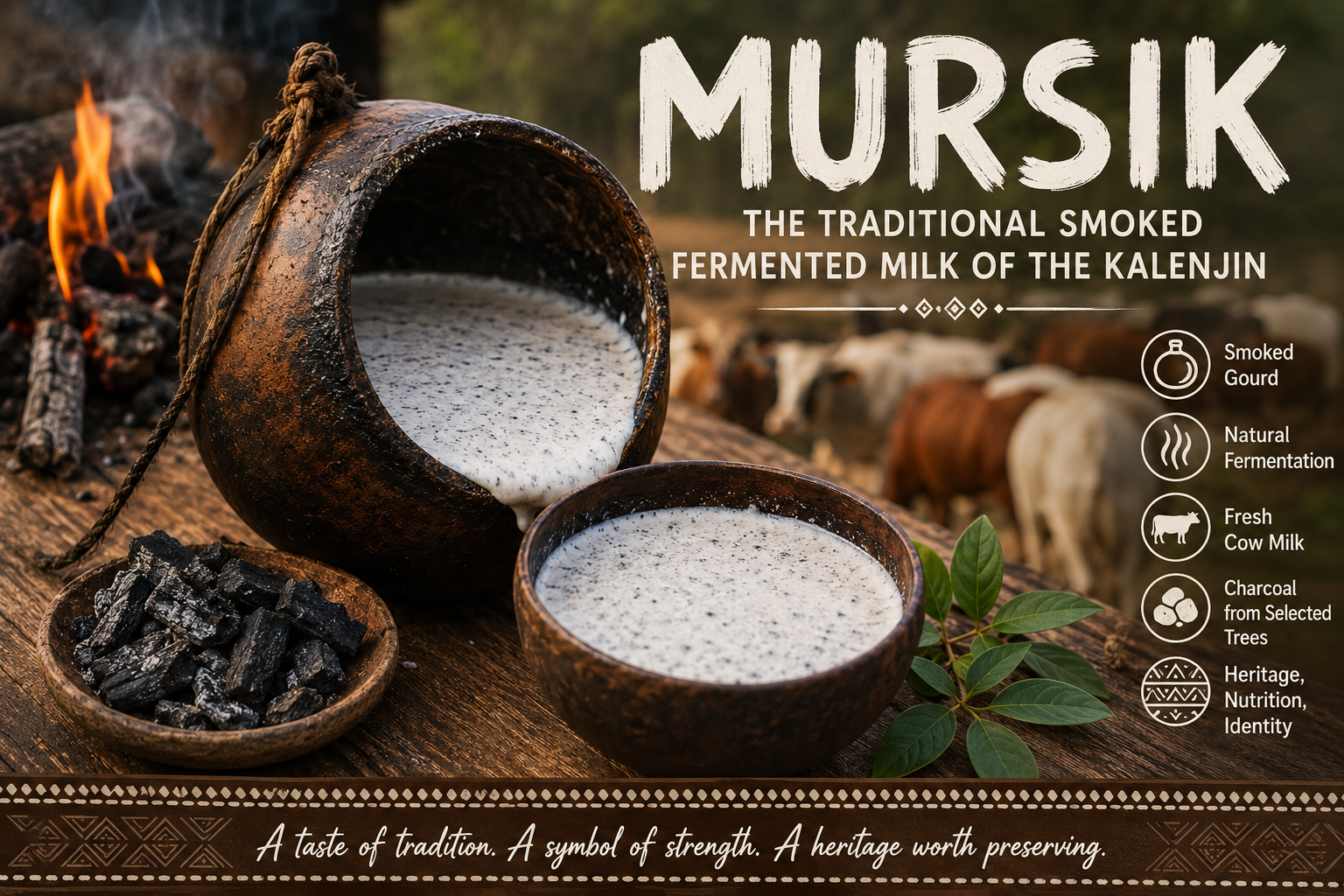
Food Identity Card
| Attribute | Details |
|---|---|
| Local Name | Mursik |
| Alternative Names | Regional variations exist among Kalenjin sub-communities, but Mursik is the widely recognized name |
| Food Category | Traditional fermented milk |
| Community | Kalenjin (including Nandi, Kipsigis, Tugen, Keiyo, Marakwet, Sabaot and related sub-communities) |
| Region | Uasin Gishu, Nandi, Elgeyo-Marakwet, Baringo, Kericho, Bomet, Nakuru, West Pokot and neighbouring areas |
| Country | Kenya |
| Primary Ingredients | Fresh cow’s milk, smoked fermentation gourd (sotet), charcoal from selected medicinal hardwoods |
| Fermentation Type | Natural lactic acid fermentation |
| Processing Technology | Smoking-assisted spontaneous milk fermentation |
| Traditional Fermentation Vessel | Smoked calabash (gourd) |
| Serving Temperature | Ambient or slightly cool |
| Commercial Availability | Household preparation with limited commercial production |
| Scientific Evidence | Extensive |
| Commercialization Potential | Exceptional |
Overview
Mursik is the traditional fermented milk of the Kalenjin people of Kenya and is widely regarded as one of Africa’s most distinctive dairy products. Unlike yoghurt or commercially fermented milk, Mursik owes its unique identity not only to fermentation but also to the deliberate smoking of the fermentation vessel and the addition of finely powdered charcoal from selected medicinal trees. These two indigenous technologies—smoking and charcoal conditioning—give Mursik its characteristic smoky aroma, grey colour, complex flavour, and remarkable keeping quality.
For centuries, Mursik has occupied a central place in Kalenjin culture. It is consumed as an everyday food, offered to honoured guests, served during weddings and initiation ceremonies, and traditionally presented during important social gatherings. It has long been associated with hospitality, health, strength, and community identity.
From a scientific perspective, Mursik represents an extraordinary example of indigenous biotechnology. Fresh milk is transformed through the activity of naturally occurring lactic acid bacteria that convert lactose into lactic acid, lowering the pH and creating an environment that inhibits many spoilage microorganisms. The smoked gourd further contributes antimicrobial compounds, while charcoal influences colour, flavour, and possibly microbial ecology.
Modern microbiological studies have identified diverse populations of beneficial bacteria within traditional Mursik, including species of Lactococcus, Lactiplantibacillus, Leuconostoc, and Streptococcus. These microorganisms contribute not only to preservation but also to flavour development, improved digestibility, and the characteristic sensory properties that distinguish Mursik from other fermented milk products. Recent studies using molecular techniques continue to reveal the remarkable microbial diversity of this indigenous food, reinforcing its value as a source of novel starter cultures and functional microorganisms.
Today, Mursik has gained international recognition through the global success of Kenyan athletes, many of whom grew up consuming the beverage. While Mursik is often celebrated in popular media as a “secret” behind the dominance of Kalenjin runners, scientific evidence indicates that athletic success results from multiple interacting factors—including genetics, training, altitude, diet, lifestyle, and culture—rather than any single food. Nevertheless, Mursik remains an excellent example of a nutrient-rich traditional food that contributes to a balanced diet.
History and Origin
The origins of Mursik are closely linked to the pastoral traditions of the Kalenjin people. Cattle have been central to Kalenjin livelihoods for centuries, providing milk, meat, wealth, and social status. In a region where refrigeration was unknown, preserving fresh milk posed a significant challenge. Through careful observation and generations of experimentation, Kalenjin communities developed a sophisticated fermentation system that transformed highly perishable milk into a product with improved shelf life, flavour, and digestibility.
Traditional knowledge suggests that the earliest forms of Mursik evolved from the natural souring of milk stored in gourds. Families noticed that milk fermented more consistently and developed superior flavour when stored in particular gourds that had been repeatedly used over many years. Rather than thoroughly removing every residue after each batch, the gourds retained microscopic communities of beneficial microorganisms. Unknown to the people at the time, these microbial biofilms acted as natural starter cultures, ensuring reliable fermentation in subsequent batches.
Another important innovation was the smoking of the fermentation gourd. Over time, Kalenjin communities discovered that exposing the inside of the gourd to smoke from selected hardwoods improved both the flavour and keeping quality of the fermented milk. This practice became an essential step in Mursik preparation and remains one of its defining characteristics today.
The use of charcoal from selected medicinal trees developed alongside smoking technology. Finely powdered charcoal was traditionally added to the smoked gourd before milk was introduced. Besides producing the beverage’s characteristic grey colour, the charcoal contributed to flavour and became an important cultural marker of authentic Mursik.
As Kalenjin communities expanded across the Rift Valley, Mursik remained an integral part of daily life. Every household developed its own preferred methods regarding the choice of wood for smoking, the amount of charcoal added, fermentation time, and desired level of acidity. Although these practices varied slightly among families and sub-communities, the fundamental principles remained remarkably consistent.
In recent decades, scientific research has confirmed that many of these indigenous practices have sound microbiological and biochemical foundations. Smoking deposits antimicrobial phenolic compounds on the inner surface of the gourd, while mature fermentation vessels harbour beneficial microbial communities that contribute to consistent fermentation. These discoveries have transformed Mursik from a culturally important traditional food into a globally recognized example of indigenous food biotechnology.
Communities and Geographic Distribution
Although Mursik is most strongly associated with the Kalenjin, it is not confined to a single subgroup. Variations of the product are prepared across much of the Rift Valley, with slight differences in smoking techniques, preferred tree species, fermentation time, and sensory characteristics.
Mursik is traditionally prepared among:
- Nandi
- Kipsigis
- Keiyo
- Tugen
- Marakwet
- Sabaot
- Terik
- Pokot (related fermented milk traditions)
- Some neighbouring pastoral communities with similar dairy cultures
The highest concentrations of traditional Mursik production are found in:
- Nandi County
- Uasin Gishu County
- Kericho County
- Bomet County
- Elgeyo-Marakwet County
- Baringo County
- West Pokot County
- Parts of Nakuru County
Migration has also spread Mursik to urban centres such as Nairobi, Eldoret, Nakuru, and Mombasa, where Kalenjin families continue to prepare it for household consumption and cultural events.
Beyond Kenya, similar smoked fermented milk traditions occur among some pastoral communities in Uganda and Tanzania, although the specific preparation methods and cultural significance differ. These similarities highlight the long history of livestock keeping and dairy fermentation across Eastern Africa.
Fresh Milk: The Foundation of Mursik
High-quality fresh milk is essential for producing authentic Mursik. Traditionally, milk was obtained from indigenous Zebu cattle and later from improved dairy breeds introduced into the region. Morning milk was generally preferred because of its freshness and lower microbial load.
Immediately after milking, the milk was filtered through a clean cloth or finely woven sieve to remove:
- Hair
- Dust
- Straw
- Insects
- Other foreign materials
Traditional households placed great emphasis on cleanliness during milking because poor-quality milk produced inferior Mursik regardless of the fermentation process.
Milk intended for fermentation was usually processed soon after milking to minimize spoilage before beneficial fermentation organisms became established.
The Traditional Fermentation Gourd (Sotet)
One of the most remarkable features of Mursik production is the use of a specially prepared fermentation gourd, traditionally known among many Kalenjin communities as the Sotet.
The gourd is far more than a simple storage container—it is the heart of the fermentation system. Through repeated use, smoking, and careful maintenance, it becomes a living fermentation vessel that supports the growth of beneficial microorganisms while contributing unique sensory characteristics to the milk.
Suitable gourds are selected from mature calabash fruits (Lagenaria siceraria). After harvesting, the fruits are dried thoroughly, the internal pulp and seeds are removed, and the shell is cleaned and cured. Only well-shaped gourds with strong walls and no cracks are retained for fermentation.
Families often keep the same gourd for many years. Older gourds are highly valued because they consistently produce superior Mursik. Modern microbiological research supports this traditional preference, demonstrating that mature fermentation vessels develop stable microbial biofilms that function as natural starter cultures.
The preparation of the gourd, however, does not end after cleaning. Before every new batch of Mursik is prepared, the inside of the vessel undergoes one of the most fascinating indigenous food technologies in Africa—controlled smoking.
The Traditional Smoking Technology: The Secret Behind Authentic Mursik
The feature that distinguishes Mursik from virtually every other fermented milk product in the world is the deliberate smoking of the fermentation gourd before milk is added. This indigenous technology has been practiced by Kalenjin communities for centuries and remains essential for producing authentic Mursik.
To an observer unfamiliar with the process, smoking may appear to serve only as a means of flavouring the milk. Modern food science, however, has shown that smoking performs multiple functions simultaneously, influencing the microbiology, chemistry, preservation, appearance, and sensory characteristics of the final product.
The smoking process demonstrates an extraordinary understanding of food preservation developed long before the discovery of microorganisms or chemical preservatives.
Selection of Wood for Smoking
Not every tree is suitable for preparing Mursik.
Traditional knowledge identifies specific tree species whose smoke produces the desired aroma, colour and fermentation characteristics.
Among the most commonly documented species are:
African Olive
Scientific name: Olea europaea subsp. cuspidata (formerly Olea africana)
This is perhaps the most widely preferred tree for smoking Mursik gourds.
Traditional reasons include:
- Pleasant aroma.
- Long-lasting smoke.
- Production of high-quality charcoal.
- Improved flavour.
- Better keeping quality.
Modern studies show that olive wood smoke contains numerous phenolic compounds with antimicrobial and antioxidant activity.
Senna
Scientific name: Senna didymobotrya
Some Kalenjin communities use this species because of its aromatic smoke and traditional medicinal significance.
Acacia Species
Several indigenous acacia species are occasionally used depending on local availability.
Their hardwood produces:
- Dense charcoal.
- Long-lasting embers.
- Aromatic smoke.
Other Indigenous Hardwoods
Different Kalenjin sub-communities possess detailed traditional knowledge regarding preferred smoking woods.
The choice depends upon:
- Local vegetation.
- Family tradition.
- Desired flavour.
- Availability.
This diversity represents an important area for future ethnobotanical research.
How the Gourd Is Smoked
The smoking process requires considerable skill.
Step 1
Small pieces of selected hardwood are burned until glowing charcoal remains.
Open flames are generally avoided because excessive heat may damage the gourd.
Step 2
Glowing embers are introduced into the empty fermentation gourd.
Step 3
The gourd is gently rotated.
Rotation allows smoke to contact every internal surface.
Experienced preparers carefully control:
- Temperature.
- Duration.
- Smoke density.
Step 4
The process continues until the inside develops an even coating of smoke residues.
Depending on household practice, smoking may continue for several minutes.
Step 5
The embers are removed.
The gourd is allowed to cool before charcoal powder and milk are added.
Why Smoke the Gourd?
Traditional explanations and modern science remarkably agree on many aspects.
1. Flavour Development
Smoke deposits hundreds of volatile flavour compounds onto the inner surface of the gourd.
These compounds gradually dissolve into the fermenting milk.
Characteristic flavour notes include:
- Smoky.
- Woody.
- Slightly sweet.
- Mildly spicy.
This smoky aroma is perhaps the defining sensory characteristic of authentic Mursik.
2. Antimicrobial Protection
Wood smoke contains numerous naturally occurring antimicrobial compounds.
These include:
- Phenols.
- Organic acids.
- Carbonyl compounds.
- Cresols.
- Guaiacol derivatives.
These compounds suppress many undesirable microorganisms while allowing acid-producing bacteria to establish successful fermentation.
Modern food preservation still uses similar smoke compounds.
3. Shelf-Life Extension
Because smoke inhibits spoilage organisms, fermented milk remains acceptable for longer periods.
Although refrigeration was unavailable historically, smoking substantially improved preservation.
4. Selection of Beneficial Microorganisms
This may be one of the most remarkable scientific aspects of Mursik.
Smoke does not sterilize the fermentation vessel.
Instead, it appears to selectively suppress undesirable microorganisms while allowing acid-tolerant beneficial bacteria to dominate.
This contributes to more reliable fermentation.
5. Insect Repellence
Smoke residues discourage flies and other insects.
This reduces contamination during fermentation.
6. Aroma Preservation
Even after repeated washing, mature gourds retain characteristic smoky aromas.
Repeated smoking gradually builds a complex flavour profile unique to each fermentation vessel.
The Role of Charcoal
One feature unique to Mursik is the deliberate addition of finely powdered charcoal.
This practice has fascinated food scientists for decades.
Traditionally, charcoal is prepared from selected hardwoods.
The charcoal is crushed into a very fine powder before being introduced into the smoked gourd.
When milk is added, the charcoal disperses throughout the beverage, producing the characteristic grey colour associated with authentic Mursik.
Why Is Charcoal Added?
Traditional explanations include:
- It improves flavour.
- It gives authentic colour.
- It strengthens the milk.
- It improves preservation.
- It produces true Mursik.
Modern science suggests several possible mechanisms.
Colour Development
This is the best understood role.
The charcoal produces the grey to black speckled appearance characteristic of traditional Mursik.
Consumers often associate this colour with authenticity.
Adsorption
Activated carbon possesses enormous surface area.
Although traditional charcoal is not chemically activated, it still exhibits adsorption properties.
It may bind:
- Certain odours.
- Pigments.
- Some organic compounds.
The extent of these effects during Mursik fermentation remains under investigation.
Possible Microbial Effects
Researchers continue investigating whether charcoal influences:
- Microbial attachment.
- Biofilm formation.
- Fermentation rate.
- Growth of beneficial bacteria.
Current evidence remains limited.
Mineral Contribution
Depending on the tree species, charcoal may contribute trace minerals.
The nutritional significance of these contributions appears small but deserves further study.
Traditional Step-by-Step Preparation of Mursik
Although every household has slight variations, traditional preparation generally follows the sequence below.
Step 1
Milk healthy cows under hygienic conditions.
Step 2
Filter the milk to remove foreign materials.
Step 3
Clean the fermentation gourd thoroughly.
Step 4
Smoke the inside of the gourd using selected hardwood.
Step 5
Prepare fine charcoal powder.
Step 6
Introduce charcoal into the smoked gourd.
Step 7
Pour fresh milk into the vessel.
Step 8
Seal the opening with a clean stopper or cover.
Step 9
Store the vessel at ambient temperature.
Step 10
Allow natural fermentation.
Depending on temperature and household preference, fermentation usually requires one to five days, although some families prefer longer maturation for a stronger sour flavour.
Step 11
Mix gently before serving if charcoal has settled.
Step 12
Serve in traditional calabashes or cups.
Traditional Fermentation Science
The transformation of fresh milk into Mursik represents a remarkable example of naturally controlled microbial succession.
Fresh milk contains:
- Lactose.
- Proteins.
- Fat.
- Minerals.
- Vitamins.
It also contains naturally occurring microorganisms introduced during milking.
When placed inside the smoked fermentation gourd, favourable microorganisms begin multiplying.
The dominant organisms are lactic acid bacteria (LAB).
These bacteria utilize lactose as their primary energy source.
The major biochemical reaction is:
Lactose → Lactic acid + Energy
As lactic acid accumulates:
- The pH falls.
- Milk proteins begin coagulating.
- Characteristic sour flavour develops.
- Harmful bacteria become inhibited.
- Shelf life increases.
This process transforms fresh milk into a stable fermented product with a distinctive aroma, texture, and taste.
At the same time, the smoke-derived compounds and mature microbial communities within the gourd interact to create the unique sensory profile that distinguishes Mursik from other fermented milk products around the world.
The result is not merely preserved milk, but a sophisticated indigenous fermented food whose preparation reflects centuries of accumulated knowledge in microbiology, chemistry, and food preservation—long before these sciences were formally recognized.
The Microbiology of Mursik
The fermentation of Mursik is driven by a complex community of beneficial microorganisms that transform fresh milk into a stable, acidic, aromatic, and nutritious product. Unlike industrial yoghurt, which relies on carefully selected commercial starter cultures, traditional Mursik undergoes spontaneous fermentation, where naturally occurring microorganisms establish themselves through a process known as microbial succession.
Modern microbiological studies have identified numerous species of lactic acid bacteria (LAB) in traditional Mursik, although the exact composition varies depending on the household, geographical location, smoking method, type of fermentation vessel, milk quality, and fermentation duration.
Lactic Acid Bacteria
The dominant microorganisms include members of the genera:
- Lactococcus
- Lactiplantibacillus
- Lacticaseibacillus
- Leuconostoc
- Streptococcus
- Enterococcus (some strains)
Commonly reported species include:
- Lactococcus lactis
- Lactiplantibacillus plantarum
- Lacticaseibacillus casei
- Lacticaseibacillus rhamnosus
- Leuconostoc mesenteroides
- Streptococcus thermophilus
These bacteria perform several important functions:
- Ferment lactose into lactic acid.
- Lower the pH.
- Produce flavour compounds.
- Suppress pathogenic microorganisms.
- Improve digestibility.
- Extend shelf life.
Yeasts
Although present in much lower numbers than LAB, yeasts also contribute to Mursik fermentation.
Reported genera include:
- Saccharomyces
- Candida
- Kluyveromyces
Yeasts contribute to:
- Aroma development.
- Small quantities of alcohol.
- Carbon dioxide production.
- Complex flavour formation.
Microbial Succession
The microbial population changes continuously during fermentation.
Early Stage
Fresh milk contains many environmental microorganisms.
During the first hours:
- LAB begin multiplying.
- Environmental contaminants decline.
Intermediate Stage
Lactic acid production accelerates.
Acidity increases.
Milk proteins coagulate.
Characteristic aroma develops.
Mature Stage
The microbial community becomes relatively stable.
Beneficial microorganisms dominate.
Spoilage organisms become greatly reduced.
This succession represents one of nature’s most effective biological preservation systems.
Chemistry of Mursik
Fermentation produces numerous chemical changes.
Lactose Breakdown
Fresh milk contains approximately 4–5% lactose.
During fermentation:
Lactose → Lactic acid
Consequences include:
- Reduced sweetness.
- Increased acidity.
- Better digestibility for some lactose-sensitive individuals.
- Improved preservation.
Protein Changes
Milk proteins undergo partial hydrolysis.
Benefits include:
- Softer texture.
- Improved digestibility.
- Release of bioactive peptides.
Some peptides formed during fermentation are currently being investigated for possible health-promoting properties.
Fat
Milk fat changes relatively little.
However, microbial enzymes produce volatile fatty acids that contribute to flavour.
Smoke Chemistry
Smoking deposits hundreds of compounds onto the fermentation vessel.
These include:
- Phenols.
- Guaiacol.
- Syringol derivatives.
- Carbonyl compounds.
- Organic acids.
These compounds contribute:
- Aroma.
- Preservation.
- Colour.
- Characteristic smoky flavour.
Charcoal Chemistry
Although charcoal contributes relatively little nutritionally, it influences:
- Colour.
- Mouthfeel.
- Surface adsorption.
- Traditional sensory quality.
Its microbiological role remains an active area of research.
Nutritional Value
Mursik remains a nutrient-rich dairy product.
Approximate nutritional components include:
- High-quality protein.
- Milk fat.
- Calcium.
- Phosphorus.
- Potassium.
- Vitamin B12.
- Riboflavin.
- Vitamin A.
- Probiotic microorganisms (depending on viability).
- Bioactive peptides.
Fermentation may also improve the bioavailability of certain nutrients and reduce lactose content, making the product more tolerable for some individuals with lactose intolerance. However, it is important to note that Mursik is not lactose-free, and tolerance varies among individuals.
Traditional Knowledge versus Scientific Evidence
One of the strengths of indigenous food systems is that many traditional observations have later been supported by scientific research. However, some beliefs remain culturally important without sufficient scientific evidence. Distinguishing between the two helps preserve traditional knowledge while maintaining scientific accuracy.
| Traditional Knowledge | Current Scientific Evidence |
|---|---|
| Smoking the gourd improves preservation. | ✔ Strongly supported. Smoke deposits phenolic compounds with antimicrobial activity. |
| Older gourds produce better Mursik. | ✔ Supported. Mature gourds develop stable microbial biofilms that function as natural starter cultures. |
| Charcoal is essential for authentic flavour. | ✔ Supported by sensory studies and traditional practice, although the exact chemical mechanisms remain under investigation. |
| Mursik is easier to digest than fresh milk. | ✔ Supported. Fermentation reduces lactose and partially breaks down proteins. |
| Mursik gives strength and stamina. | ✔ Nutritionally plausible due to its protein, minerals, and energy content, but “strength” has not been directly measured scientifically. |
| Mursik alone explains the success of Kalenjin athletes. | ✖ Not supported. Athletic success is influenced by genetics, altitude, training, nutrition, socioeconomic factors, motivation, and culture. Mursik may contribute as part of an overall healthy traditional diet but is not the sole explanation. |
Health Benefits
Modern scientific studies support several nutritional benefits of fermented milk products such as Mursik.
Improved Digestibility
Fermentation partially digests:
- Lactose.
- Proteins.
This may improve tolerance among some lactose-sensitive individuals.
Beneficial Microorganisms
Freshly prepared Mursik contains living microorganisms that may contribute to gut microbial diversity.
Potential benefits include:
- Improved intestinal health.
- Better digestion.
- Competitive exclusion of some harmful bacteria.
Not all Mursik products meet the scientific criteria for probiotic foods, and probiotic effects depend on the specific microorganisms present and their viability.
Bioactive Peptides
During fermentation, microbial enzymes release peptides from milk proteins.
Some laboratory studies suggest these peptides may possess:
- Antioxidant activity.
- Antimicrobial activity.
- Angiotensin-converting enzyme (ACE) inhibitory activity, which is associated with blood pressure regulation.
Further human studies are needed.
Mineral Availability
The acidic environment may improve the absorption of certain minerals, particularly calcium.
Cultural Importance
Among the Kalenjin, Mursik is much more than a fermented milk product—it is a symbol of hospitality, identity, and continuity.
For generations, Mursik has been offered:
- To honoured guests.
- During weddings.
- At initiation ceremonies.
- During naming ceremonies.
- At family celebrations.
- During conflict resolution meetings.
- At community gatherings.
Serving Mursik demonstrates respect, generosity, and friendship.
It also strengthens intergenerational connections, as the preparation methods are traditionally taught within families.
Mursik and Kenyan Athletics
Few traditional foods have attracted as much international attention as Mursik because of its association with the remarkable success of Kalenjin athletes.
Many elite middle- and long-distance runners have spoken about consuming Mursik while growing up. This has led to widespread claims that Mursik is the “secret” behind Kenya’s dominance in distance running.
Scientific evidence, however, paints a more nuanced picture.
Mursik is undoubtedly a nutritious food, providing:
- High-quality protein.
- Calcium.
- Energy.
- Beneficial microorganisms.
These nutrients support general health and recovery.
However, researchers agree that athletic excellence cannot be attributed to a single food. The success of Kalenjin runners is influenced by multiple interacting factors, including:
- High-altitude upbringing.
- Early physical activity.
- Structured training.
- Genetics.
- Diet as a whole.
- Cultural motivation.
- Socioeconomic factors.
Mursik should therefore be viewed as one valuable component of a healthy traditional diet rather than a standalone performance-enhancing food.
Food Safety
Traditional Mursik can be a safe product when prepared correctly.
Important food safety considerations include:
- Using milk from healthy animals.
- Maintaining good milking hygiene.
- Cleaning fermentation vessels thoroughly.
- Proper smoking of the gourd.
- Protecting the product from insects and dust.
- Appropriate fermentation times.
- Hygienic storage.
Modern commercial production should also include:
- Pasteurization (where appropriate).
- Microbiological quality control.
- Standardized starter cultures if consistency is desired.
- Food-grade packaging.
- Cold-chain management where applicable.
Commercialization Potential
Mursik possesses enormous commercial potential.
Possible products include:
- Premium bottled Mursik.
- Artisan fermented milk.
- Functional dairy beverages.
- Freeze-dried starter cultures derived from traditional strains.
- Tourism experiences centred on traditional dairy processing.
- Export products targeting the Kenyan diaspora.
The global success of products such as kefir, skyr, and ayran demonstrates that traditional fermented dairy products can achieve international recognition while retaining their cultural identity.
Sustainability
Promoting Mursik also supports:
- Indigenous dairy systems.
- Conservation of traditional knowledge.
- Sustainable livestock production.
- Rural livelihoods.
- Cultural tourism.
- Indigenous tree conservation through the continued use and management of preferred smoking species.
Research Gaps
Despite decades of research, many important questions remain.
Future studies should investigate:
- Complete microbial community profiling using next-generation sequencing.
- The effects of different smoking woods on flavour chemistry and microbial ecology.
- The role of charcoal in fermentation.
- Bioactive peptides generated during fermentation.
- Shelf-life optimization.
- Development of indigenous starter cultures.
- Nutritional changes during storage.
- Consumer acceptance in international markets.
- Climate change impacts on traditional dairy systems.
Food Scientist’s Perspective
Mursik represents one of the finest examples of indigenous dairy biotechnology in Africa. The integration of carefully selected fermentation vessels, controlled smoking, charcoal conditioning, and spontaneous lactic acid fermentation demonstrates a sophisticated understanding of food preservation developed through generations of observation and experience.
Rather than viewing Mursik as an old-fashioned rural food, it should be recognized as a scientifically valuable fermentation system with significant potential for innovation in dairy science, functional foods, microbial biotechnology, and sustainable food systems. Continued documentation and research will not only preserve an important element of Kenya’s cultural heritage but may also inspire the development of new fermented dairy products for regional and global markets.
Interesting Facts
- Mursik is traditionally fermented in a smoked gourd rather than a modern container.
- The grey colour of authentic Mursik comes from finely powdered charcoal prepared from selected hardwoods.
- Older fermentation gourds often produce more consistent Mursik because they harbour beneficial microbial biofilms.
- Mursik has been consumed by Kalenjin communities for centuries.
- The smoking process contributes both flavour and antimicrobial compounds.
- Mursik is one of the most extensively studied traditional fermented milk products in East Africa.
References
- Alais, C. (1984). Science of Milk. Butterworths, London.
- Ashenafi, M. (2006). The microbiology of indigenous fermented foods and beverages of Africa. In R. S. Touré & Y. Battcock (Eds.), Fermented Fruits and Vegetables: A Global Perspective. FAO Agricultural Services Bulletin No. 134.
- Beukes, E. M., Bester, B. H., & Mostert, J. F. (2001). The microbiology of South African traditional fermented milks. International Journal of Food Microbiology, 63(3), 189–197. https://doi.org/10.1016/S0168-1605(00)00417-1
- FAO. (1990). The Technology of Traditional Milk Products in Developing Countries. FAO Animal Production and Health Paper No. 85. Rome: Food and Agriculture Organization.
- FAO & WHO. (2006). Probiotics in Food: Health and Nutritional Properties and Guidelines for Evaluation. FAO Food and Nutrition Paper No. 85.
- Franz, C. M. A. P., Holzapfel, W. H., & Stiles, M. E. (1999). Enterococci at the crossroads of food safety? International Journal of Food Microbiology, 47(1–2), 1–24. https://doi.org/10.1016/S0168-1605(99)00007-0
- Gran, H. M., Wetlesen, A., Mutukumira, A. N., Rukure, G., & Narvhus, J. A. (2003). Occurrence of pathogenic bacteria in Zimbabwean traditionally fermented milk. International Journal of Food Microbiology, 88(2–3), 159–168. https://doi.org/10.1016/S0168-1605(03)00169-4
- Holzapfel, W. H. (2002). Appropriate starter culture technologies for small-scale fermentation in developing countries. International Journal of Food Microbiology, 75(3), 197–212. https://doi.org/10.1016/S0168-1605(01)00707-3
- Kalui, C. M., Mathara, J. M., Kutima, P. M., Kiiyukia, C., & Wongo, L. E. (2008). Partial characterization and identification of lactic acid bacteria involved in production of ikii. Journal of Tropical Microbiology and Biotechnology, 4(1), 3–15. https://doi.org/10.4314/jtmb.v4i1.35461
- Kebede, A., Viljoen, B., Gadaga, T. H., Narvhus, J. A., & Lourens-Hattingh, A. (2007). The effect of container smoking and traditional preservation methods on fermented milk. International Journal of Food Microbiology, 114(1), 1–9.
- Kurwijila, L. R. (2006). Hygienic handling, preservation and processing of milk in the pastoral communities of East Africa. In Smallholder Dairy Production and Marketing. FAO.
- Mathara, J. M., Schillinger, U., Kutima, P. M., Mbugua, S. K., Guigas, C., Franz, C. M. A. P., & Holzapfel, W. H. (2004). Isolation, identification and characterization of dominant microorganisms of kule naoto: The Maasai traditional fermented milk in Kenya. International Journal of Food Microbiology, 94(3), 269–278. https://doi.org/10.1016/j.ijfoodmicro.2004.01.008
- Mathara, J. M., Schillinger, U., Kutima, P. M., Mbugua, S. K., Holzapfel, W. H. (2008). Functional characteristics of Lactobacillus spp. isolated from Kenyan traditional fermented milk products. International Journal of Food Microbiology, 126(1–2), 57–64.
- Mutukumira, A. N. (1995). Properties of milk fermented naturally by the Shona people of Zimbabwe. Journal of Applied Bacteriology, 79(1), 22–30.
- Narvhus, J. A., & Gadaga, T. H. (2003). The role of traditional fermented foods in food security and food safety in Africa. Food Research International, 36(9–10), 1113–1117. https://doi.org/10.1016/S0963-9969(03)00108-9
- O’Connor, C. B. (1994). Rural Dairy Technology. ILRI (International Livestock Research Institute), Addis Ababa.
- Osano, O., Arimi, S., & Ombui, J. (2014). Microbiological quality of fermented milk products marketed in Kenya. African Journal of Food Science, 8(7), 380–386.
- Rattray, F. P., & O’Connell, M. J. (2011). Fermented milks: Kefir, yoghurt and indigenous products. In Encyclopedia of Dairy Sciences (2nd ed.). Academic Press.
- Shiby, V. K., & Mishra, H. N. (2013). Fermented milks and probiotic dairy products. Critical Reviews in Food Science and Nutrition, 53(5), 482–496. https://doi.org/10.1080/10408398.2010.547398
- Tamime, A. Y. (Ed.). (2006). Fermented Milks. Blackwell Publishing.
- Tamime, A. Y., & Robinson, R. K. (2007). Yoghurt: Science and Technology (3rd ed.). Woodhead Publishing.
- Wafula, E. N., Muhonja, C. N., Kuja, J. O., & Owaga, E. E. (2022). Lactic acid bacteria from African fermented cereal-based products: Potential biological control agents for mycotoxins in Kenya. Journal of Food Quality, 2022, 2397767. https://doi.org/10.1155/2022/2397767
- Wanjohi, P. J., Mbugua, S. K., & Imungi, J. K. (2011). Traditional fermented foods and beverages in Kenya: Indigenous knowledge, microbiology and commercialization opportunities. African Journal of Food Science, 5(12), 673–684.
- Wood, B. J. B. (Ed.). (2012). Microbiology of Fermented Foods (2nd ed.). Springer.
- World Health Organization & Food and Agriculture Organization. (2002). Guidelines for the Evaluation of Probiotics in Food.