

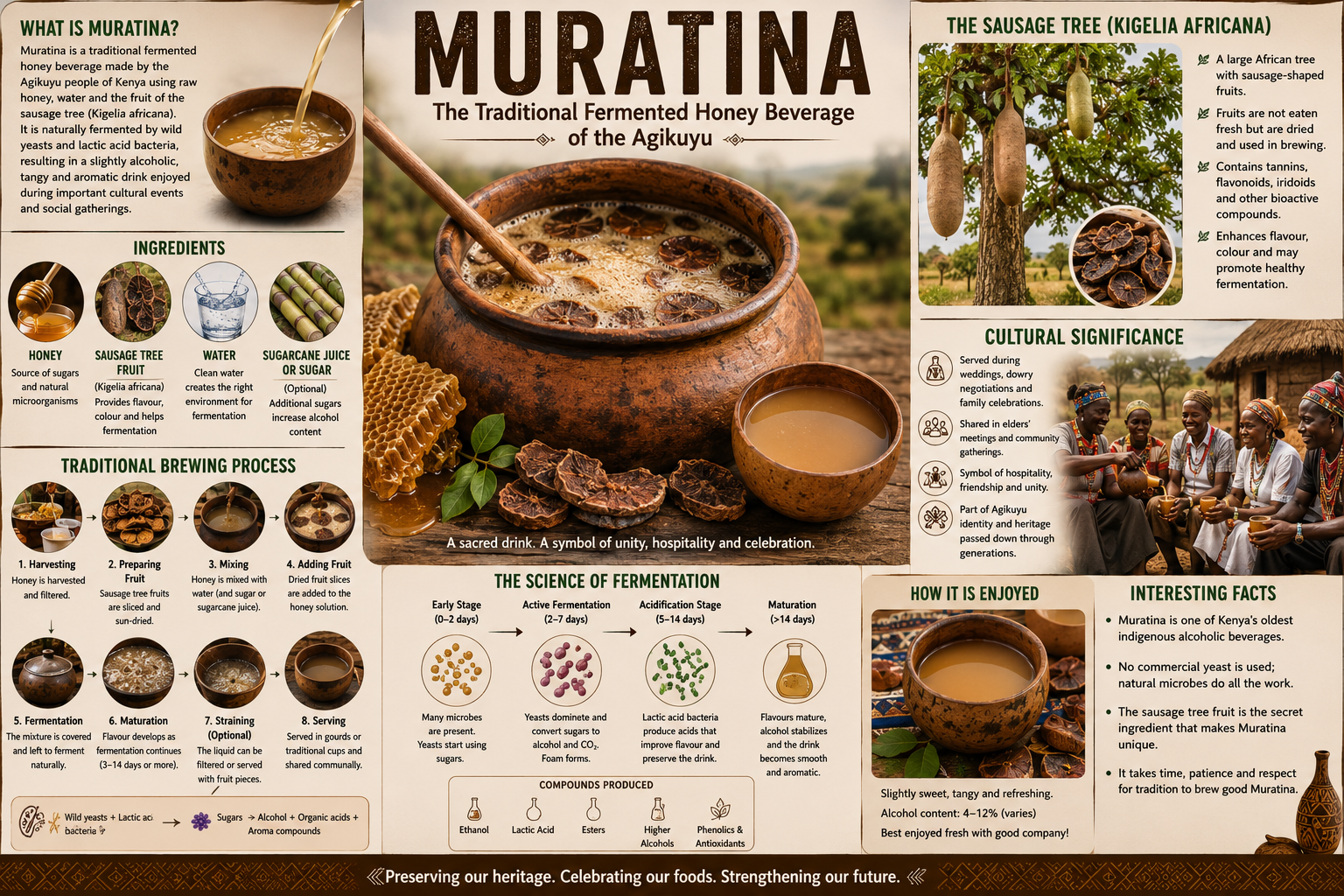
Food Identity Card
| Attribute | Details |
|---|---|
| Local Name | Muratina |
| Alternative Names | Sometimes referred to simply as traditional Kikuyu beer (although this does not fully capture its uniqueness) |
| Food Category | Traditional fermented alcoholic beverage |
| Community | Agikuyu (Kikuyu) |
| Region | Kiambu, Murang’a, Nyeri, Kirinyaga, Nyandarua, Embu (some areas), Laikipia and Kikuyu communities throughout Kenya |
| Country | Kenya |
| Primary Ingredients | Honey, water, fruits of the sausage tree (Kigelia africana), sugarcane juice or sugar (modern adaptation) |
| Fermentation Type | Natural alcoholic fermentation dominated by wild yeasts with contributions from lactic acid bacteria |
| Processing Technology | Botanical-assisted spontaneous fermentation |
| Traditional Fermentation Vessel | Clay pots, wooden barrels, gourds and later plastic containers |
| Alcohol Content | Variable (typically 4–12% depending on formulation and fermentation time) |
| Commercial Availability | Limited artisanal production; not widely commercialized |
| Scientific Evidence | Extensive compared with many indigenous African beverages |
| Commercialization Potential | Exceptional |
Overview
Muratina is one of Kenya’s most iconic indigenous fermented beverages and a defining element of Agikuyu cultural heritage. Prepared traditionally from honey, water, and the fruit of the sausage tree (Kigelia africana), Muratina is far more than an alcoholic drink. It is the product of centuries of accumulated indigenous knowledge that combines botanical science, microbiology, fermentation technology, ecology, and social tradition.
Unlike industrial alcoholic beverages that depend on purified yeast cultures and standardized recipes, Muratina relies primarily on spontaneous fermentation. Wild yeasts naturally present on honey, the sausage tree fruit, fermentation vessels, and the surrounding environment convert fermentable sugars into alcohol while simultaneously generating a complex mixture of organic acids, esters, higher alcohols, and aromatic compounds responsible for the beverage’s distinctive flavour and aroma.
One of the defining features of Muratina is the deliberate use of the mature fruit of the sausage tree. Among the Agikuyu, this fruit is not merely an ingredient but an indispensable component of the brewing process. Traditionally, a Muratina prepared without the sausage tree fruit is considered incomplete because the fruit contributes characteristic flavour, colour, mouthfeel, and is widely believed to promote successful fermentation. Modern science has confirmed that Kigelia africana contains numerous bioactive compounds, including iridoids, flavonoids, phenolics, tannins, and naphthoquinones, although the precise microbiological mechanisms through which it influences fermentation remain an active area of research.
Historically, Muratina occupied an important place in virtually every major stage of Agikuyu life. It was prepared for weddings, initiation ceremonies, dowry negotiations, harvest celebrations, reconciliation meetings, and gatherings of elders. Offering Muratina symbolized hospitality, friendship, and respect, while sharing the drink reinforced social bonds and communal identity.
Today, Muratina continues to be brewed in many rural communities and has experienced renewed interest as Kenyans increasingly seek to preserve indigenous foods and beverages. At the same time, researchers recognize Muratina as an important example of African traditional biotechnology, with potential applications in food science, microbial ecology, functional beverages, and heritage tourism.
History and Origin
The exact age of Muratina is unknown, but oral traditions indicate that it has been prepared by the Agikuyu for many generations, long before colonial administration introduced commercial beers and spirits into Kenya. It developed within a society that possessed extensive knowledge of honey harvesting, beekeeping, medicinal plants, and fermentation.
The availability of wild honey, combined with the abundance of the sausage tree in many parts of Central Kenya, provided the essential raw materials required for brewing. Over time, Agikuyu communities refined the process through careful observation, learning how different proportions of honey, water, fruit, fermentation time, and environmental conditions influenced the final beverage.
Unlike many fermented beverages that originated primarily for recreational consumption, Muratina fulfilled multiple social and ceremonial functions. It was regarded as a drink of hospitality, an offering during important negotiations, and an essential component of major communal events. Sharing Muratina symbolized unity, trust, and mutual respect among participants.
During the colonial period, indigenous alcoholic beverages, including Muratina, came under increasing regulation. Colonial authorities frequently associated traditional brewing with illicit alcohol production and introduced licensing systems that restricted indigenous brewing practices. These policies, together with changing lifestyles and the increasing availability of commercial alcoholic beverages, contributed to a decline in traditional production.
Despite these challenges, Muratina survived because families continued to prepare it for ceremonies and cultural events. In recent decades, renewed interest in indigenous knowledge, food heritage, and cultural tourism has stimulated efforts to document, preserve, and promote the beverage as part of Kenya’s rich culinary heritage.
The Muratina Tree: Kigelia africana
No discussion of Muratina is complete without understanding the remarkable tree from which the beverage derives its name.
Kigelia africana, commonly known as the sausage tree, is a large deciduous tree belonging to the family Bignoniaceae. It is widely distributed throughout sub-Saharan Africa and grows naturally in riverine forests, woodland, and savannah ecosystems. The tree is easily recognized by its enormous sausage-shaped fruits, which may exceed half a metre in length and weigh several kilograms.
Although the fresh fruit is generally not eaten because of its fibrous texture and bitter taste, it has been valued for centuries in traditional African medicine and indigenous food systems. Among the Agikuyu, slices of mature sausage tree fruit are an essential ingredient in Muratina production.
Botanical Classification
- Kingdom: Plantae
- Order: Lamiales
- Family: Bignoniaceae
- Genus: Kigelia
- Species: Kigelia africana (Lam.) Benth.
Distribution in Kenya
The sausage tree occurs naturally in many counties, including:
- Kiambu
- Murang’a
- Nyeri
- Kirinyaga
- Embu
- Meru
- Machakos
- Kitui
- Makueni
- Kajiado
- Narok
- Baringo
- Turkana
- Tana River
- Kwale
- Kilifi
It is also widely planted as an ornamental tree because of its spectacular flowers and distinctive hanging fruits.
Traditional Harvesting
Muratina brewers generally harvest mature fruits after they have fully developed. The fruits are sliced and allowed to dry before being incorporated into the fermentation vessel. Drying reduces moisture, improves storage stability, and concentrates some flavour components while making the fruit easier to store for use throughout the year.
Why Is the Sausage Tree Used?
For generations, Agikuyu brewers have maintained that authentic Muratina cannot be produced without the sausage tree fruit. Traditional explanations include:
- It “starts” the fermentation.
- It gives Muratina its characteristic flavour.
- It produces the desired colour.
- It strengthens the beverage.
- It improves keeping quality.
- It gives the drink its distinctive identity.
Modern food science suggests several complementary explanations.
Source of Wild Microorganisms
The surface of dried sausage tree fruits may carry naturally occurring yeasts and bacteria that contribute to fermentation. These microorganisms can supplement those already present in honey and the fermentation vessel, helping to establish a vigorous fermentation.
Rich Source of Polyphenols
Kigelia africana contains numerous phenolic compounds with antioxidant activity. These compounds may influence flavour stability, colour development, and interactions with fermenting microorganisms.
Tannins
The fruit contains tannins that contribute mild astringency, body, and mouthfeel. Tannins may also influence microbial ecology by selectively inhibiting certain spoilage organisms while allowing desirable fermentative microorganisms to dominate.
Bioactive Phytochemicals
Scientific investigations have identified:
- Iridoids
- Flavonoids
- Naphthoquinones
- Coumarins
- Phenolic acids
- Sterols
- Saponins
Many of these compounds exhibit antimicrobial or antioxidant properties in laboratory studies. However, their precise contribution to Muratina fermentation has not yet been fully elucidated.
A Major Scientific Question
One of the most intriguing unanswered questions is whether the sausage tree primarily acts as:
- A microbial inoculum,
- A biochemical fermentation enhancer,
- A source of flavour compounds,
- Or a combination of all three.
Answering this question represents one of the most exciting opportunities in African fermentation research.
Traditional Ingredients
The traditional preparation of Muratina requires surprisingly few ingredients, yet each plays a critical role in determining the success of fermentation and the quality of the final beverage. The simplicity of the recipe masks a sophisticated understanding of indigenous food science that has evolved over generations.
Primary Ingredients
Honey
Honey is the principal source of fermentable sugars and forms the foundation of authentic Muratina.
Traditionally, honey was harvested from:
- Hollow tree hives
- Log hives
- Natural rock crevices
- Wild bee colonies
The quality of honey greatly influences:
- Alcohol production
- Aroma
- Sweetness
- Colour
- Final flavour profile
Raw honey contains:
- Fructose
- Glucose
- Small quantities of sucrose
- Minerals
- Organic acids
- Pollen
- Wild yeasts
- Lactic acid bacteria
- Enzymes such as invertase and glucose oxidase
Unlike refined sugar, raw honey contributes both nutrients and naturally occurring microorganisms that may assist fermentation.
Sausage Tree Fruit (Kigelia africana)
Prepared slices of mature sausage tree fruit are added directly to the fermentation vessel.
Traditional brewers often preserve dried fruit throughout the year, ensuring Muratina can be prepared even when fresh fruits are unavailable.
The fruit contributes:
- Characteristic flavour
- Slight bitterness
- Tannins
- Colour
- Indigenous identity
- Possible fermentation-enhancing compounds
No authentic Muratina is traditionally prepared without it.
Water
Clean water serves as the fermentation medium.
Historically, brewers preferred:
- Spring water
- River water
- Rainwater
Water quality influenced fermentation success.
Today, potable water is recommended to minimize contamination.
Sugarcane Juice (Traditional Variation)
Some regions traditionally incorporated freshly extracted sugarcane juice.
Advantages include:
- Additional fermentable sugars
- Increased alcohol yield
- Enhanced sweetness
- Additional flavour complexity
Sugar (Modern Adaptation)
Modern household preparations frequently substitute refined sugar for part of the honey.
Although this reduces production costs, many brewers consider honey-rich Muratina superior in flavour and authenticity.
Traditional Brewing Equipment
Historically, Muratina was prepared using locally available materials.
These included:
- Clay fermentation pots
- Large gourds
- Wooden stirring sticks
- Woven sieves
- Calabashes
- Honey harvesting containers
- Sharp knives for slicing sausage tree fruits
Unlike modern breweries, no metal fermenters or commercial yeast cultures were used.
Traditional Brewing Process
The brewing process varies slightly among households, but the following sequence represents the traditional approach most consistently described in ethnographic accounts.
Step 1. Harvesting Honey
Fresh honey is collected from traditional beehives.
Impurities such as:
- Wax
- Dead bees
- Plant fragments
are removed by straining.
Step 2. Preparing the Sausage Tree Fruit
Mature fruits are harvested from healthy trees.
The fruits are:
- Washed if necessary.
- Cut into slices.
- Sun-dried for several days.
Drying reduces moisture and allows long-term storage.
Step 3. Preparing the Fermentation Vessel
Traditionally, the vessel is cleaned thoroughly.
Depending on local practice it may be:
- Washed.
- Smoked lightly.
- Rinsed.
- Allowed to dry.
Older vessels were often preferred because they consistently produced successful fermentations.
Step 4. Preparing the Honey Solution
Honey is mixed with clean water.
The ratio varies among households depending on:
- Desired alcohol content.
- Honey availability.
- Intended use.
- Fermentation duration.
Step 5. Addition of Sausage Tree Fruit
Prepared slices of Kigelia africana are added to the honey solution.
The fruit begins interacting with the liquid almost immediately.
Step 6. Mixing
The mixture is stirred thoroughly.
Proper mixing ensures:
- Uniform sugar distribution.
- Wetting of fruit slices.
- Oxygen incorporation during the early stages of fermentation.
Step 7. Primary Fermentation
The vessel is covered but not sealed airtight.
Primary fermentation usually begins within one to three days.
Observable changes include:
- Bubble formation.
- Foam development.
- Increasing acidity.
- Fruity aroma.
- Alcohol production.
Step 8. Secondary Fermentation
As fermentation continues:
- Yeast populations increase.
- Alcohol concentration rises.
- Flavour matures.
- Acidity stabilizes.
The beverage gradually develops its characteristic taste.
Step 9. Filtration (Optional)
Some households filter Muratina before serving.
Others deliberately retain suspended fruit particles because they contribute traditional appearance and flavour.
Step 10. Serving
Muratina is traditionally served:
- In calabashes.
- Wooden cups.
- Clay vessels.
Consumption usually occurs during communal gatherings rather than individual drinking.
Traditional Brewing Science
Although traditional brewers described the process using cultural knowledge rather than microbiological terminology, every step reflects sound scientific principles.
Why Honey Is Mixed With Water
Pure honey contains approximately 80% sugars.
Its low water activity prevents yeast growth.
Adding water:
- Dilutes the sugars.
- Activates dormant microorganisms.
- Creates conditions suitable for fermentation.
Without sufficient water, fermentation cannot proceed efficiently.
Why the Sausage Tree Fruit Is Added Early
Adding the fruit at the beginning allows:
- Extraction of phenolic compounds.
- Release of tannins.
- Possible transfer of wild microorganisms.
- Interaction between fruit chemistry and fermenting yeasts.
Early addition also maximizes flavour extraction.
Why the Vessel Is Covered but Not Airtight
Fermentation produces large quantities of carbon dioxide.
A completely sealed vessel may rupture because of pressure.
Loose covering:
- Protects against insects.
- Reduces contamination.
- Allows gases to escape.
Why Foam Appears
Foam develops because yeasts convert sugars into:
- Ethanol.
- Carbon dioxide.
The escaping gas becomes trapped temporarily, producing the characteristic foamy surface.
Traditional brewers often regarded healthy foaming as evidence of successful fermentation.
Why Flavour Changes Over Time
Early fermentation produces:
- Sweet flavour.
- Mild acidity.
As fermentation progresses:
- Alcohol increases.
- Organic acids accumulate.
- Esters develop.
- Aroma compounds become more complex.
Consequently, Muratina tastes very different after one day compared with one week.
Fermentation Microbiology
The microbiology of Muratina is considerably more complex than many people realize.
Unlike industrial beer, which is produced using a single commercial yeast strain, Muratina undergoes a mixed microbial fermentation involving numerous interacting microorganisms.
These organisms originate from:
- Honey.
- Sausage tree fruit.
- Water.
- Fermentation vessels.
- Air.
- Brewing utensils.
Their relative abundance changes throughout fermentation.
Phase 1. Early Fermentation
Initially many environmental microorganisms are present.
These include:
- Environmental bacteria.
- Wild yeasts.
- Lactic acid bacteria.
Competition begins almost immediately.
Phase 2. Active Alcoholic Fermentation
Wild yeasts become dominant.
Likely species include:
- Saccharomyces cerevisiae
- Hanseniaspora species
- Pichia species
- Candida species
These organisms convert simple sugars into:
- Ethanol.
- Carbon dioxide.
- Esters.
- Higher alcohols.
- Volatile aroma compounds.
Phase 3. Acidification
Simultaneously, lactic acid bacteria increase.
Likely species include:
- Lactiplantibacillus plantarum
- Leuconostoc mesenteroides
- Lacticaseibacillus species
These bacteria produce:
- Lactic acid.
- Acetic acid (small quantities).
- Other organic acids.
Their activity contributes:
- Pleasant acidity.
- Microbiological stability.
- Flavour complexity.
Microbial Succession
One of the most remarkable aspects of Muratina is microbial succession.
Different microorganisms dominate at different stages.
This natural succession ensures that:
- Sugars are efficiently converted.
- Alcohol develops gradually.
- Harmful microorganisms are suppressed.
- Characteristic flavours emerge.
Modern microbiology has confirmed that this dynamic microbial ecosystem is one of the defining features of traditional African fermented beverages.
The Chemistry of Muratina
The transformation of honey, water and sausage tree fruit into Muratina is governed by a complex series of biochemical reactions involving microorganisms, plant compounds and naturally occurring enzymes. Although traditional brewers described the process in cultural rather than scientific terms, modern analytical chemistry has revealed many of the transformations responsible for the beverage’s unique characteristics.
Sugar Conversion
Raw honey is composed primarily of simple sugars, especially:
- Fructose
- Glucose
During fermentation, yeasts metabolize these sugars, producing:
- Ethanol (alcohol)
- Carbon dioxide
- Heat
The simplified reaction is:
Glucose → Ethanol + Carbon dioxide + Energy
This reaction forms the foundation of Muratina production.
Organic Acids
In addition to alcohol, fermentation generates several organic acids, including:
- Lactic acid
- Acetic acid
- Succinic acid
- Malic acid (small amounts)
These acids contribute to:
- Pleasant sourness.
- Improved microbial stability.
- Enhanced flavour complexity.
- Lower pH.
Aroma Compounds
The characteristic aroma of Muratina develops through the formation of volatile compounds such as:
- Esters
- Higher alcohols
- Aldehydes
- Ketones
These compounds give Muratina fruity, floral, honey-like and mildly spicy notes that distinguish it from industrial alcoholic beverages.
Phenolic Compounds
The sausage tree contributes numerous phenolic compounds including:
- Flavonoids
- Tannins
- Iridoids
- Phenolic acids
These compounds may contribute to:
- Colour.
- Mouthfeel.
- Antioxidant capacity.
- Flavour stability.
Some also possess antimicrobial properties that may influence fermentation.
Nutritional Value
Although Muratina is primarily consumed as a beverage, it contains nutrients derived from honey and the sausage tree fruit.
Approximate nutritional contributors include:
Honey
- Simple carbohydrates.
- Trace minerals.
- Organic acids.
- Antioxidants.
- Small quantities of amino acids.
Sausage Tree Fruit
- Polyphenols.
- Tannins.
- Antioxidants.
- Plant secondary metabolites.
Fermentation
Microbial activity may also contribute:
- B-complex vitamins.
- Organic acids.
- Bioactive metabolites.
Because Muratina is an alcoholic beverage, it should be consumed responsibly. Its nutritional benefits do not outweigh the health risks associated with excessive alcohol consumption.
Cultural Importance
Few traditional beverages occupy as important a place in Kenyan cultural life as Muratina.
For the Agikuyu, Muratina has traditionally represented:
- Hospitality.
- Friendship.
- Unity.
- Respect.
- Celebration.
- Community identity.
Preparation of Muratina was itself a communal activity involving family members and neighbours, particularly when large quantities were required for ceremonies.
The beverage symbolized trust because sharing a common drink reinforced social bonds between participants.
Muratina in Traditional Ceremonies
Historically, Muratina featured prominently in numerous cultural events.
Marriage Negotiations
During ruracio (dowry negotiations), Muratina was shared among elders from both families.
Its presence symbolized goodwill and mutual respect.
Serving Muratina during these negotiations reinforced the seriousness of the agreement and the strengthening of ties between families.
Weddings
Traditional weddings often involved the preparation of large quantities of Muratina for guests.
The beverage accompanied communal feasting, music and dancing.
Initiation Ceremonies
Circumcision ceremonies and initiation into adulthood were frequently accompanied by Muratina.
The beverage symbolized transition, maturity and communal acceptance.
Harvest Celebrations
Successful harvests provided opportunities for thanksgiving and communal celebration.
Muratina often formed part of these festivities.
Elders’ Meetings
Community elders traditionally consumed Muratina during important discussions involving:
- Land.
- Conflict resolution.
- Governance.
- Community welfare.
The sharing of a common drink reinforced collective decision-making.
Hospitality
Visitors were often welcomed with Muratina as a sign of generosity and respect.
Offering Muratina demonstrated that guests were valued members of the community.
Food Safety Considerations
Traditional Muratina is generally safe when produced using clean ingredients and hygienic practices.
However, several important food safety considerations deserve attention.
Biological Hazards
Potential risks include:
- Contaminated water.
- Poor hygiene during preparation.
- Contaminated fermentation vessels.
- Insect contamination.
Traditional practices such as covering fermentation vessels and using clean containers helped minimize these risks.
Chemical Hazards
The greatest modern concern is adulteration.
Some illegally produced alcoholic beverages marketed as “Muratina” have been adulterated with industrial alcohol or other hazardous substances.
These products bear little resemblance to authentic traditional Muratina and should not be confused with genuine indigenous brewing practices.
Mycotoxins
If sugar or cereal ingredients are contaminated before fermentation, mycotoxins may already be present.
Fermentation does not necessarily eliminate these toxins.
Good-quality raw materials therefore remain essential.
Traditional Beliefs and Health
Muratina has long been associated with several traditional health beliefs.
Among the Agikuyu it has traditionally been believed to:
- Promote appetite.
- Restore energy after strenuous work.
- Strengthen social relationships.
- Improve general wellbeing.
Some traditional medicinal uses have also been reported.
Modern research confirms that Kigelia africana possesses numerous biologically active compounds with antioxidant, antimicrobial and anti-inflammatory properties.
However, there is currently no scientific evidence that Muratina itself should be regarded as a medicinal beverage.
Potential health benefits associated with plant phytochemicals should always be considered separately from the risks associated with alcohol consumption.
Commercialization Potential
Muratina has enormous potential for commercialization as one of Kenya’s flagship heritage beverages.
Possible opportunities include:
- Premium bottled Muratina.
- Craft fermentation industries.
- Heritage tourism.
- Cultural restaurants.
- Export markets targeting the Kenyan diaspora.
- Geographical Indication (GI) registration.
- Museum and cultural centre demonstrations.
Commercial production would require:
- Standardized recipes.
- Defined starter cultures.
- Controlled fermentation.
- Shelf-life studies.
- Food safety certification.
- Modern packaging while preserving authenticity.
Sustainability
Promoting Muratina also supports environmental conservation.
Its production encourages:
- Conservation of Kigelia africana.
- Sustainable beekeeping.
- Indigenous honey production.
- Biodiversity conservation.
- Traditional ecological knowledge.
Protecting these resources benefits both rural livelihoods and Kenya’s cultural heritage.
Research Gaps
Despite considerable research, many important questions remain unanswered.
Future studies should investigate:
- Complete microbial succession during fermentation.
- Role of Kigelia africana in microbial selection.
- Comprehensive flavour chemistry.
- Nutritional composition.
- Antioxidant changes during fermentation.
- Controlled starter cultures.
- Shelf-life optimization.
- Consumer sensory preferences.
- Commercial-scale production.
- Geographic variation in traditional recipes.
Food Scientist’s Perspective
Muratina is one of the finest examples of indigenous African biotechnology.
Its preparation integrates botanical knowledge, fermentation microbiology, chemistry, food preservation and cultural tradition into a remarkably sophisticated process developed entirely through observation and experience.
The deliberate incorporation of Kigelia africana distinguishes Muratina from nearly every other traditional fermented beverage in the world. While scientific studies have documented many of the phytochemicals present in the sausage tree, understanding precisely how the fruit shapes microbial ecology and flavour development remains one of the most exciting research frontiers in African food science.
Rather than replacing Muratina with industrial beverages, modern science should help preserve, validate and improve this remarkable indigenous technology while ensuring food safety and product consistency.
Interesting Facts
- Muratina derives its name from the sausage tree (Kigelia africana).
- The sausage tree fruit is generally inedible when fresh but becomes an essential ingredient in Muratina brewing.
- Honey provides most of the fermentable sugars responsible for alcohol production.
- Muratina has traditionally been prepared for weddings, initiation ceremonies, harvest celebrations and elders’ meetings.
- Authentic Muratina relies on wild microorganisms rather than commercial yeast.
- The beverage represents one of Kenya’s oldest examples of indigenous biotechnology.
- Modern research continues to investigate the unique role of the sausage tree in fermentation.
References
Achi, O. K. (2005). The potential for upgrading traditional fermented foods through biotechnology. African Journal of Biotechnology, 4(5), 375–380. https://doi.org/10.5897/AJB2005.000-3083
Kigigha, L. T., et al. (2016). Phytochemical and medicinal properties of Kigelia africana: A review. Journal of Medicinal Plants Research, 10(37), 607–617.
Kipkorir, R., & Onyango, C. (Various publications on traditional Kenyan fermented beverages).
Kunyanga, C. N., Mbugua, S. K., Kang’ethe, E. K., & Imungi, J. K. (2009). Microbiological and acidity changes during the traditional production of Kirario. African Journal of Food, Agriculture, Nutrition and Development, 9(6), 1419–1435. https://doi.org/10.4314/ajfand.v9i6.46261
Nout, M. J. R. (1981). Aspects of the manufacture and consumption of Kenyan traditional fermented beverages. Wageningen University. https://doi.org/10.18174/205798
Owuor, B. O., & Kisangau, D. P. (2006). Kenyan medicinal plants used as antivenin: A comparison of plant usage. Journal of Ethnobiology and Ethnomedicine, 2, 7. (Includes ethnobotanical information on Kigelia africana.) https://doi.org/10.1186/1746-4269-2-7
Van Wyk, B.-E., Van Oudtshoorn, B., & Gericke, N. (1997). Medicinal Plants of South Africa. Briza Publications.
Wafula, E. N., Muhonja, C. N., Kuja, J. O., & Owaga, E. E. (2022). Lactic acid bacteria from African fermented cereal-based products: Potential biological control agents for mycotoxins in Kenya. Journal of Food Quality, 2022, 2397767. https://doi.org/10.1155/2022/2397767