

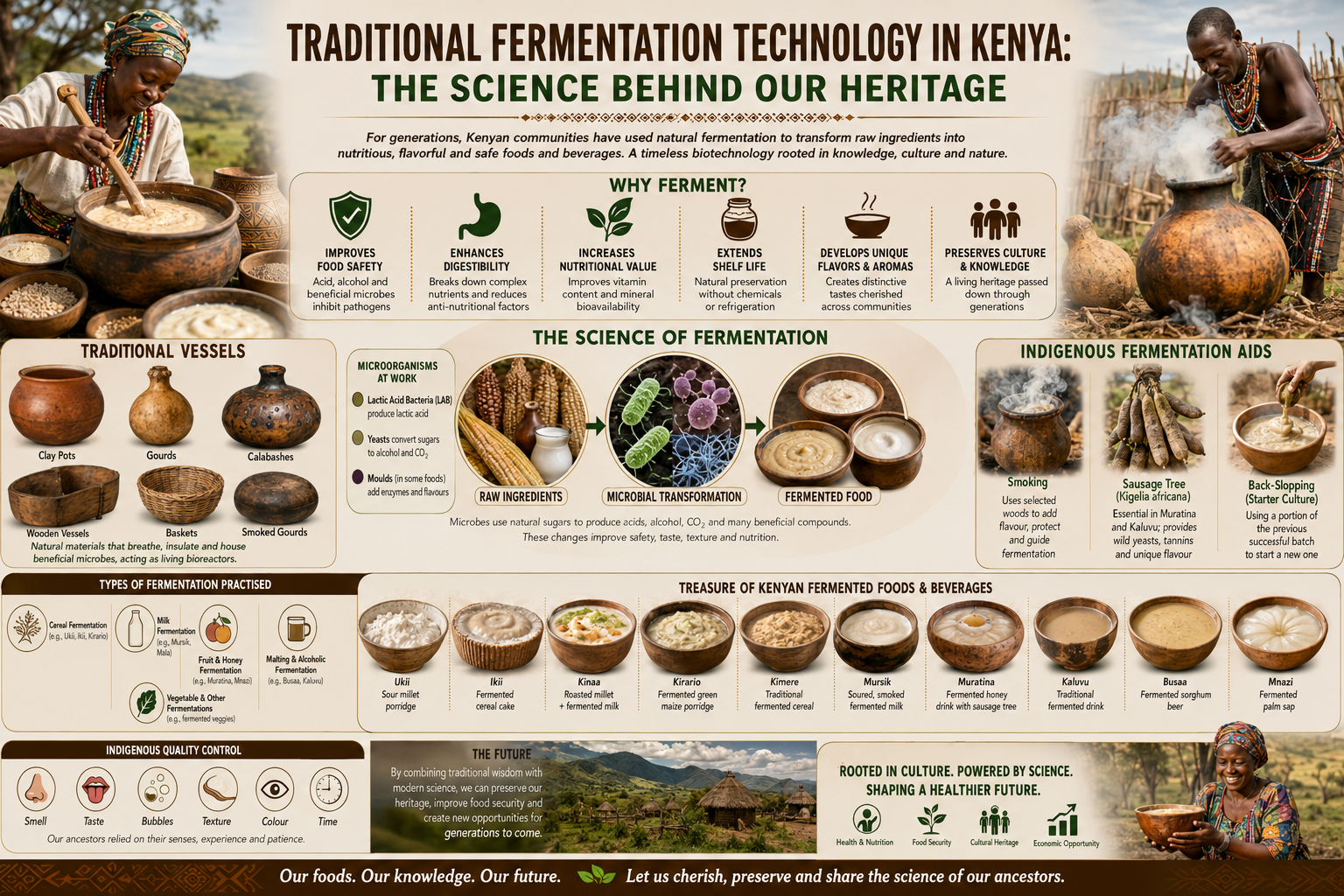
Technology Identity Card
| Attribute | Details |
| Technology Name | Traditional Fermentation Technology |
| Technology Type | Indigenous biological food processing and preservation technology |
| Estimated Origin | Prehistoric; likely practiced for several thousand years in Eastern Africa |
| Primary Purpose | Food preservation, flavour development, improved nutrition, beverage production and food safety |
| Communities | Practiced by virtually all Kenyan communities with region-specific techniques and products |
| Foods Produced | Ukii, Ikii, Kinaa, Kirario, Kimere, Ucuru wa Mukio, Mursik, Mala, Suusa, Kaluvu, Muratina, Busaa, Togwa and many others |
| Primary Microorganisms | Lactic acid bacteria, yeasts and selected moulds |
| Typical Fermentation Vessels | Clay pots, gourds, calabashes, wooden containers, baskets and later plastic containers |
| Current Status | Widely practiced but increasingly threatened by modernization and changing lifestyles |
| Scientific Recognition | High, although many indigenous processes remain poorly documented |
| Commercial Potential | Exceptional |
1. Introduction
Long before refrigerators, pasteurizers, preservatives and industrial starter cultures were invented, Kenyan communities had already mastered one of nature’s most remarkable biological processes—fermentation.
Through careful observation and centuries of experimentation, communities discovered that allowing certain foods and beverages to undergo controlled natural transformation not only improved their taste but also prolonged their shelf life, enhanced their nutritional value and, in many cases, made them safer to consume. Without understanding microorganisms or biochemistry, indigenous societies learned to guide microbial activity using carefully selected ingredients, specialized containers, controlled environmental conditions and cultural practices passed from one generation to another.
Today, fermentation is recognized as one of humanity’s oldest biotechnology innovations. In Kenya, it remains deeply woven into the country’s cultural identity, producing an extraordinary diversity of foods and beverages that differ from one community to another yet share common scientific principles.
Traditional fermentation is not simply a method of preserving food. It is an integrated indigenous technology that combines microbiology, chemistry, engineering, ecology, agriculture and cultural knowledge. Every fermented product represents generations of accumulated experience regarding which raw materials to use, which containers to ferment in, how long to ferment, when the product is ready and how to recognize both successful and failed fermentations.
Across Kenya, fermentation has traditionally been applied to cereals, milk, fruits, honey, palm sap and numerous plant materials. Communities developed specialized techniques suited to their environments. Pastoral communities refined milk fermentation using smoked gourds, agricultural communities perfected cereal fermentations using millet, sorghum and maize, while forest and riverine communities developed unique fruit and palm fermentations. Each system reflects the ecological resources, livelihoods and cultural practices of the people who created it.
Modern microbiology has confirmed that these indigenous technologies depend primarily on beneficial microorganisms such as lactic acid bacteria and yeasts. These microbes convert sugars into organic acids, alcohol, carbon dioxide and numerous flavour compounds, creating foods with distinctive tastes, aromas and textures while suppressing many harmful microorganisms. Scientific research has demonstrated that fermentation may improve digestibility, reduce anti-nutritional factors, increase mineral bioavailability and, in some products, introduce probiotic microorganisms that contribute to gut health.
Despite this remarkable heritage, much of Kenya’s indigenous fermentation knowledge remains undocumented. Many traditional products have been described only briefly in scientific literature, while the underlying technologies, indigenous quality-control methods, fermentation vessels and cultural practices have received far less attention than they deserve. Rapid urbanization, changing diets, declining use of traditional crops and the replacement of indigenous utensils with modern materials further threaten the survival of this knowledge.
This article documents traditional fermentation as a living technology rather than simply a collection of recipes. By combining indigenous knowledge with modern food science, it highlights the sophistication of Kenya’s traditional fermentation systems and emphasizes their importance for food security, nutrition, biodiversity, cultural preservation and future innovation.
2. A Brief History of Fermentation in Kenya
The exact origin of fermentation in Kenya cannot be determined with certainty because fermentation predates written history. Archaeological evidence from Africa indicates that people were processing cereals, collecting milk and producing fermented beverages thousands of years ago. As communities transitioned from hunting and gathering to agriculture and pastoralism, fermentation became an increasingly important strategy for preserving surplus food and improving its nutritional quality.
Among early farming communities, cereals such as finger millet, sorghum and later maize became staple foods. These grains were highly seasonal, requiring processing methods that enhanced flavour, improved digestibility and reduced spoilage. Spontaneous fermentation naturally emerged when soaked grains or cooked porridges were left standing under ambient conditions, allowing naturally occurring microorganisms to multiply. Over time, communities learned to control these fermentations by selecting appropriate containers, fermentation times and environmental conditions.
Pastoral communities followed a parallel path. Fresh milk spoils rapidly in warm climates, yet it is highly nutritious. Rather than viewing spoilage as a problem, communities discovered that controlled fermentation transformed milk into products that lasted longer, tasted better and were often easier to digest. Specialized gourds, many of them deliberately smoked using selected hardwoods, became both fermentation vessels and microbial ecosystems supporting desirable fermentation organisms.
The development of fermented beverages followed a similar pattern. Honey, sugar-rich fruits and malted cereals provided ideal substrates for natural yeasts, resulting in alcoholic beverages such as Muratina, Kaluvu and Busaa. These drinks became central to ceremonies, negotiations, weddings, harvest celebrations and spiritual practices. Far from being recreational beverages alone, they fulfilled important cultural, religious and social functions.
Over centuries, communities refined these technologies through observation rather than formal scientific experimentation. Experienced fermenters recognized successful fermentations by changes in smell, taste, colour, bubbling activity, texture and even the sounds produced during active fermentation. They selected particular gourds, clay pots, plant materials and smoking techniques because they consistently produced superior products, even though the microbial mechanisms responsible remained unknown.
Modern research now confirms that these traditional observations were scientifically sound. Many indigenous practices unintentionally selected beneficial microorganisms, suppressed pathogens and optimized fermentation conditions. Rather than representing primitive food preparation, Kenyan fermentation technologies demonstrate sophisticated empirical knowledge accumulated over many generations.
3. The Science Behind Fermentation
At its simplest, fermentation is the transformation of food by beneficial microorganisms.
The principal microorganisms involved include:
- Lactic acid bacteria.
- Yeasts.
- Certain beneficial moulds in a few traditional products.
These microorganisms consume naturally occurring sugars and produce substances that transform the food.
The major products of fermentation include:
- Lactic acid.
- Alcohol.
- Carbon dioxide.
- Organic acids.
- Vitamins.
- Flavour compounds.
- Aroma compounds.
As fermentation progresses, acidity increases and pH decreases. This increasingly acidic environment suppresses many spoilage and disease-causing microorganisms while favouring beneficial fermentative microbes. The result is a food that is often safer, more stable and organoleptically superior to the raw material.
Different microorganisms dominate different fermentations. Cereal and milk fermentations are usually driven by lactic acid bacteria, while alcoholic beverages depend on yeasts that convert sugars into ethanol and carbon dioxide. Many traditional Kenyan fermentations involve complex microbial communities where bacteria and yeasts interact synergistically, each contributing unique biochemical transformations.
The success of fermentation therefore depends not only on the microorganisms themselves but also on the raw materials, fermentation vessels, temperature, water quality, oxygen availability and the indigenous techniques used to guide microbial succession.
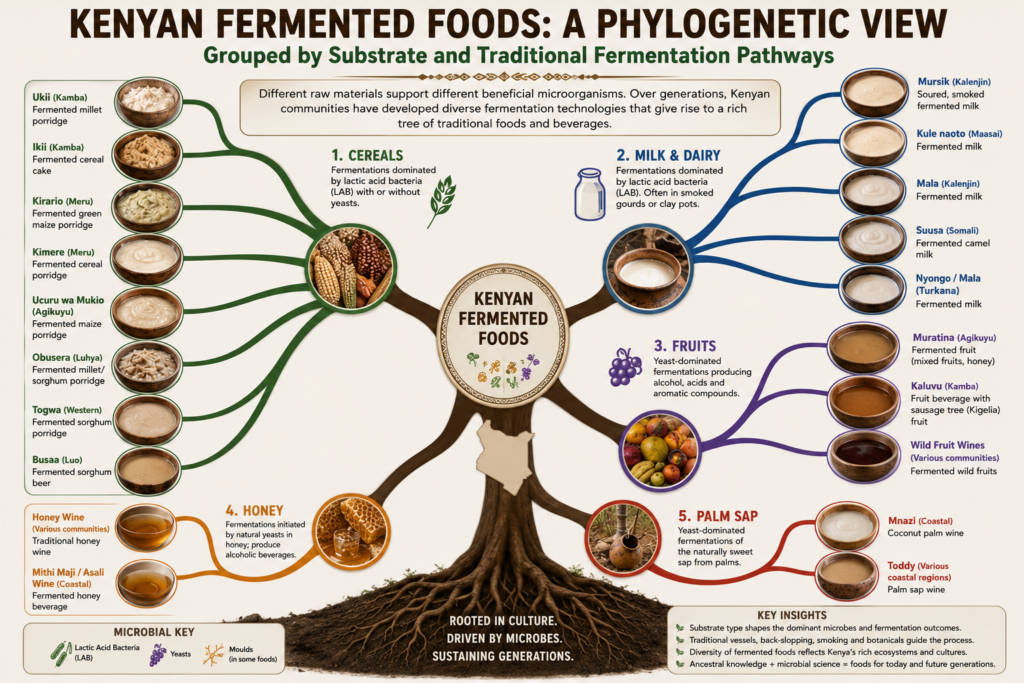
4. Types of Traditional Fermentation Practised in Kenya
Although the principles of fermentation are universal, Kenyan communities developed remarkably diverse methods of initiating, controlling, and maintaining fermentation. These techniques evolved independently in response to local environments, available raw materials, climate, and cultural practices. Modern food science now recognizes that many of these indigenous methods were highly effective at selecting beneficial microorganisms while suppressing spoilage organisms.
4.1 Natural Spontaneous Fermentation
The oldest and most widespread fermentation method in Kenya is spontaneous fermentation. No commercial starter culture is added. Instead, microorganisms naturally present on the raw materials and surrounding environment initiate the fermentation.
Sources of microorganisms
Traditional fermentations begin because microorganisms are naturally found on:
- Cereal grains
- Milk
- Fruits
- Honey
- Water
- Grinding stones
- Gourds and calabashes
- Clay pots
- Wooden utensils
- The hands of the person preparing the food
- Airborne dust and surrounding vegetation
When environmental conditions become favourable—adequate moisture, moderate temperature and available nutrients—these microorganisms begin multiplying rapidly.
Initially, many different microorganisms are present. However, as fermentation progresses, beneficial organisms such as lactic acid bacteria produce acids that lower the pH. The increasingly acidic environment inhibits undesirable microorganisms while allowing acid-tolerant fermentative organisms to dominate.
This natural process explains why traditional fermented foods become progressively more stable and develop characteristic flavours over time.
Foods traditionally produced by spontaneous fermentation
Across Kenya, spontaneous fermentation is used to prepare numerous products, including:
- Ukii (Kamba)
- Ikii (Kamba)
- Kirario (Meru)
- Kimere (Meru)
- Togwa (Tanzania and western Kenya)
- Obusera (Luhya and neighbouring communities)
- Fermented cassava products
- Various traditional vegetable fermentations
- Numerous cereal beverages
Although each community has its own recipes, the underlying microbiological principles remain remarkably similar.
4.2 Back-Slopping: Kenya’s Indigenous Starter Culture Technology
One of the least appreciated yet most sophisticated traditional technologies is back-slopping.
Back-slopping refers to deliberately introducing microorganisms from a successful previous fermentation into a new batch.
Many Kenyan communities did not completely wash fermentation containers after use. Instead, a thin layer of residue from the previous successful fermentation remained attached to the inside of the vessel.
To an outside observer this might appear unhygienic.
In reality, modern microbiology shows that this residue often functioned as a natural starter culture.
The residue contained:
- Beneficial lactic acid bacteria
- Selected yeasts
- Mature microbial biofilms
- Fermentation metabolites
When fresh raw materials were added, these microorganisms immediately colonized the new substrate, producing a faster, more predictable fermentation.
Advantages of back-slopping
Traditional communities may not have understood microorganisms, but they clearly recognized that certain containers consistently produced superior fermented foods.
Scientific advantages include:
- Faster fermentation.
- Greater consistency.
- Improved flavour.
- Better suppression of undesirable microorganisms.
- Reduced fermentation failure.
- Development of unique household-specific flavours.
Today, exactly the same principle is used commercially in sourdough bread, yoghurt production, cheese manufacture and many industrial fermentations.
4.3 Smoking-Assisted Fermentation
Perhaps one of Kenya’s most fascinating indigenous fermentation technologies is smoking-assisted fermentation.
Unlike smoking used primarily for preserving meat or fish, this technology involved smoking the fermentation vessel itself rather than the food.
It is especially well documented among pastoral communities producing fermented milk.
How smoking was performed
After cleaning, the inside of a gourd or calabash was exposed to smoke generated from carefully selected hardwoods.
The smoke coated the interior surface with a thin layer of smoke compounds before milk was introduced.
This practice was repeated regularly.
Why smoke the fermentation vessel?
Modern food science provides several explanations.
1. Antimicrobial activity
Wood smoke contains numerous compounds including:
- Phenols
- Organic acids
- Carbonyl compounds
- Aldehydes
Many of these inhibit spoilage bacteria and moulds.
Rather than sterilizing the vessel completely, smoking selectively suppresses undesirable microorganisms while allowing desirable fermentation organisms to dominate.
2. Flavour development
Smoke contributes distinctive aromas and flavours that become characteristic of many fermented milk products.
The smoky flavour of Mursik, for example, is one of its defining characteristics.
3. Improved shelf life
Smoke compounds delay spoilage by slowing the growth of undesirable microorganisms.
4. Colour development
Some smoked milk products acquire the cream, brown or grey colours traditionally associated with high quality.
5. Insect deterrence
Smoke residues also discourage insects from contaminating stored milk.
Communities using smoked fermentation vessels
Smoking traditions have been documented among several Kenyan pastoral communities, including:
- Kalenjin
- Maasai
- Samburu
- Pokot
- Turkana
- Rendille (with regional variations)
Although techniques differ, the underlying scientific principles remain similar.
4.4 Botanical-Assisted Fermentation
One of the most remarkable features of Kenyan indigenous fermentation is the deliberate incorporation of plant materials into the fermentation process.
Rather than serving simply as flavouring agents, many plants appear to perform multiple biological functions during fermentation.
This area remains one of the least studied aspects of African food science.
The Sausage Tree (Kigelia africana)
No example illustrates indigenous fermentation knowledge better than the use of the sausage tree in traditional Kamba beverages such as Muratina and Kaluvu.
The large woody fruits of the sausage tree are sliced, dried or otherwise prepared before being introduced into fermenting beverages.
Although every family may have slightly different preparation methods, the use of Kigelia africana is considered essential for producing authentic Muratina and Kaluvu.
Why is the sausage tree used?
Traditional explanations include:
- It “starts” fermentation.
- It gives the beverage strength.
- It improves flavour.
- It produces the correct colour.
- It gives the beverage its characteristic identity.
Modern science suggests several possible mechanisms.
Natural microbial reservoir
The fruit surface may harbour naturally occurring yeasts and bacteria that initiate fermentation.
Polyphenols
Kigelia africana contains numerous polyphenolic compounds that may influence flavour, colour and antioxidant properties.
Tannins
Tannins may contribute:
- Astringency.
- Mouthfeel.
- Improved microbial stability.
- Complex flavour development.
Medicinal compounds
Numerous phytochemicals have been identified in Kigelia africana, including iridoids, flavonoids and phenolic compounds.
Although these compounds are well documented pharmacologically, their precise role during beverage fermentation remains largely unexplored.
A major research opportunity
Surprisingly, relatively few scientific studies have investigated how the sausage tree actually influences fermentation microbiology.
Important unanswered questions include:
- Does it contribute starter microorganisms?
- Does it selectively inhibit undesirable microbes?
- Does it improve antioxidant capacity?
- Does it alter flavour chemistry?
- Does it accelerate fermentation?
These represent excellent opportunities for future research.
Other Botanical Fermentation Aids
Across Kenya, different communities also employ:
- Selected tree barks.
- Medicinal roots.
- Aromatic herbs.
- Leaves.
- Plant ash.
- Honey.
- Wild fruits.
Some are added primarily for flavour, while others appear to influence fermentation itself.
Many remain scientifically undocumented despite centuries of successful traditional use.
4.5 Malting-Assisted Fermentation
Communities producing traditional cereal beers developed another remarkable technology—malting.
Before fermentation, grains such as sorghum or millet are allowed to germinate.
During germination the grain produces enzymes, particularly amylases, that convert starch into simple sugars.
Without these sugars, yeast cannot efficiently produce alcohol.
Malting therefore represents a natural biochemical pretreatment that prepares cereals for fermentation.
Traditional beverages produced using malted cereals include:
- Busaa
- Various sorghum beers
- Millet beers
- Regional household brews
The combination of malting and fermentation demonstrates an advanced empirical understanding of cereal biochemistry developed long before modern enzymology.
4.6 Fruit Fermentation
Fruit fermentation relies primarily on naturally occurring yeasts present on fruit surfaces.
Unlike cereal fermentations dominated by lactic acid bacteria, fruit fermentations often become alcoholic because yeasts convert fruit sugars into ethanol.
Kenyan examples include:
- Muratina
- Palm wine
- Sugarcane fermentations
- Honey-based beverages
Wild yeasts associated with fruits, insects and the surrounding environment initiate fermentation naturally, often without the addition of commercial starters.
4.7 Milk Fermentation
Milk fermentation is especially important among Kenya’s pastoral communities.
Fresh milk naturally supports the growth of microorganisms.
When controlled appropriately, beneficial lactic acid bacteria rapidly dominate, producing:
- Lactic acid.
- Characteristic sour flavour.
- Improved microbiological stability.
- Better digestibility.
- Extended shelf life.
Traditional milk fermentation frequently incorporates:
- Smoking.
- Specialized gourds.
- Back-slopping.
- Household starter cultures.
- Indigenous quality-control practices.
Products include:
- Mursik
- Mala
- Kule naoto
- Suusa
- Various regional fermented milks
4.8 Cereal Fermentation
Cereal fermentation is probably the most widespread fermentation technology in Kenya.
Traditionally fermented cereals include:
- Finger millet.
- Sorghum.
- Maize.
- Pearl millet.
- Composite cereal blends.
These grains are transformed into porridges, beverages and doughs through the activity of lactic acid bacteria and yeasts.
Many cereal fermentations improve flavour while reducing phytates and enhancing mineral bioavailability, making them particularly valuable in communities that rely heavily on cereals as staple foods.
5. Traditional Fermentation Vessels: The Hidden Bioreactors
One of the most overlooked aspects of indigenous fermentation technology is the fermentation vessel itself. Traditional Kenyan communities did not simply use whatever container was available. Over generations, they selected vessels that consistently produced superior fermented foods and beverages.
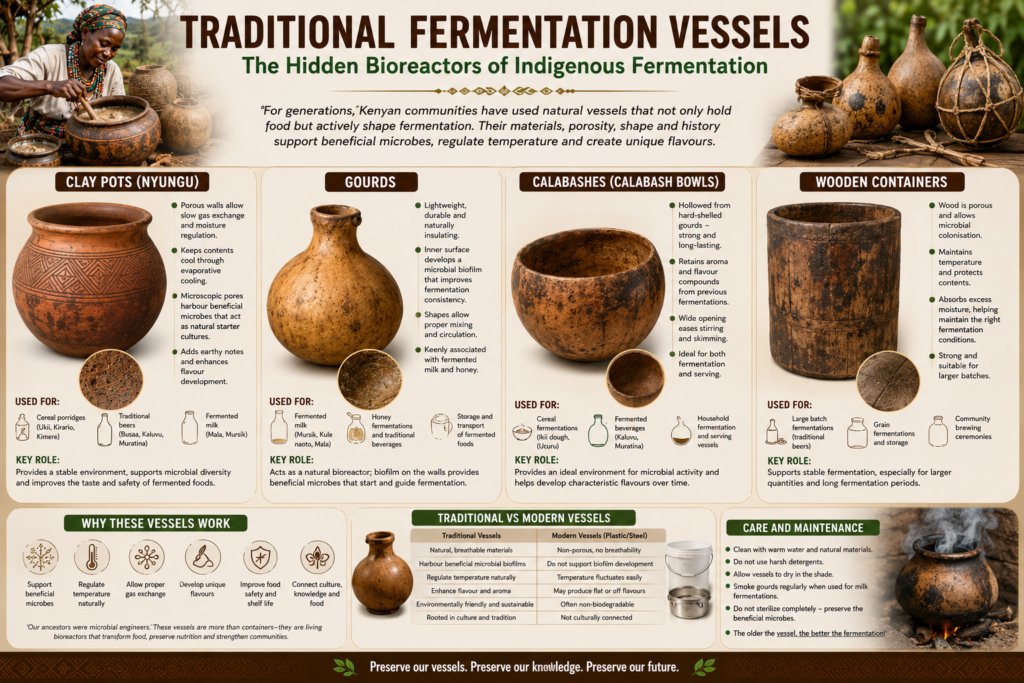
Today, food scientists recognize that fermentation vessels influence:
- Microbial succession
- Temperature regulation
- Oxygen availability
- Moisture retention
- Flavour development
- Aroma formation
- Shelf life
- Food safety
Many traditional vessels effectively functioned as natural bioreactors, providing ideal conditions for beneficial microorganisms.
5.1 Clay Pots (Nyungu and Related Vessels)
Clay pots are among the oldest fermentation vessels in Kenya.
They were widely used for fermenting:
- Cereal porridges
- Traditional beers
- Fruit beverages
- Milk
- Honey products
Why clay?
Modern science explains several advantages.
Porosity
Unglazed clay contains microscopic pores.
These pores:
- Allow slow gas exchange.
- Moderate moisture movement.
- Help stabilize fermentation.
Temperature Regulation
Clay cools through evaporation.
Even under warm conditions, internal temperatures remain relatively stable, preventing excessive microbial growth while supporting fermentation.
Microbial Reservoir
Repeated use allows beneficial microorganisms to colonize microscopic pores.
These resident microbial communities become natural starter cultures.
Chemical Neutrality
Properly prepared clay contributes little flavour contamination.
Instead, it allows the natural flavours of the fermenting product to develop.
Many Kenyan communities believed that older clay pots produced better fermented foods.
Modern microbiology strongly supports this observation.
5.2 Gourds and Calabashes
Few utensils symbolize African food culture more than the calabash.
Throughout Kenya, dried gourds served as:
- Fermentation vessels.
- Storage containers.
- Drinking vessels.
- Transport containers.
Communities including the Kalenjin, Maasai, Samburu, Pokot, Turkana, Kamba and others developed specialized uses for gourds.
Why gourds?
Excellent insulation
The thick wall slows temperature fluctuations.
Low weight
Easy to transport.
Natural shape
Provides favourable mixing conditions.
Biofilm formation
Repeated fermentation creates stable microbial biofilms on internal surfaces.
These biofilms contain microorganisms adapted to that particular fermentation.
Consequently, each household often possessed gourds with slightly different microbial communities, contributing unique flavours.
5.3 Smoked Gourds
Some fermented milk products require gourds that have been smoked before use.
Rather than sterilizing the vessel completely, smoke modifies the microbial ecology.
Scientific benefits include:
- Selective antimicrobial activity.
- Reduced spoilage.
- Characteristic smoky flavour.
- Improved shelf life.
- Lower insect infestation.
Repeated smoking also deposits phenolic compounds that contribute antioxidant activity.
Products such as Mursik owe much of their distinctive sensory profile to this remarkable indigenous technology.
5.4 Wooden Containers
Certain communities traditionally used wooden vessels for fermentation.
Wood offers several advantages:
- Good insulation.
- Natural porosity.
- Formation of microbial biofilms.
- Mechanical durability.
Because wood absorbs moisture, microorganisms can persist within microscopic structures, allowing repeated successful fermentations.
5.5 Modern Containers
Today many households use:
- Plastic buckets.
- Plastic jerrycans.
- Glass bottles.
- Stainless steel containers.
Although convenient, these materials often behave differently from traditional vessels.
Smooth plastic surfaces do not support microbial biofilms in the same manner as gourds or clay.
Consequently, many elders believe modern containers produce fermented foods with less desirable flavour.
Scientific investigation of these observations remains limited.
6. Indigenous Fermentation Starters
Commercial food industries purchase freeze-dried starter cultures.
Traditional Kenyan communities developed their own equally ingenious systems.
6.1 Residual Starter Cultures
As discussed earlier, many households deliberately retained residues from previous successful fermentations.
These residues functioned as living microbial inoculants.
Advantages included:
- Faster acid production.
- Improved flavour.
- Greater consistency.
- Reduced fermentation failure.
6.2 Mature Fermentation Vessels
Old gourds and clay pots often required little or no added starter.
Beneficial microorganisms already colonized the surfaces.
Simply adding fresh milk or cereal slurry frequently initiated rapid fermentation.
6.3 Botanical Starters
Several Kenyan fermentations incorporate plants that appear to influence microbial development.
Examples include:
- Sausage tree (Kigelia africana)
- Various medicinal roots
- Tree barks
- Aromatic herbs
Although some undoubtedly contribute flavour, others may also introduce microorganisms or alter microbial selection.
This area deserves extensive scientific investigation.
6.4 Honey
Honey serves multiple purposes.
Besides providing sugars for yeast growth, raw honey naturally contains:
- Osmotolerant yeasts.
- Lactic acid bacteria.
- Wild microorganisms.
These may contribute to fermentation initiation in traditional beverages.
6.5 Natural Grain Microbiota
Every cereal grain carries microorganisms on its surface.
These include:
- Lactic acid bacteria.
- Yeasts.
- Environmental bacteria.
Cleaning reduces contaminants but does not eliminate the beneficial microorganisms responsible for spontaneous fermentation.
7. Indigenous Quality Control
Perhaps the greatest achievement of Kenyan fermentation technology is that communities consistently produced high-quality fermented foods without pH meters, incubators or microbiological laboratories.
Instead, they relied on sophisticated sensory evaluation.
Aroma
Experienced fermenters judged fermentation by smell.
Successful products developed:
- Pleasant sour aroma.
- Fruity aroma.
- Fresh cereal notes.
- Characteristic smoky notes.
Unpleasant smells immediately indicated failure.
Taste
Small samples were tasted repeatedly.
Quality indicators included:
- Balanced acidity.
- Appropriate sweetness.
- Mild bitterness where expected.
- No putrid flavours.
Appearance
Good fermentation produced characteristic colours.
Examples include:
- Creamy white.
- Light brown.
- Reddish brown.
- Dark amber for beverages.
Unexpected discoloration indicated contamination.
Texture
Communities recognized ideal texture.
Examples:
- Smooth porridge.
- Thick paste.
- Proper viscosity.
- Appropriate foam.
Bubbling
Fermenting beverages produce carbon dioxide.
Bubble formation indicated active yeast metabolism.
Lack of bubbling sometimes suggested fermentation failure.
Sound
Many experienced brewers listened carefully.
Fermenting vessels often produced subtle sounds associated with escaping gas.
These auditory observations helped determine fermentation progress.
Time
Each food had approximate fermentation periods.
Experienced women adjusted these according to:
- Ambient temperature.
- Season.
- Raw materials.
- Container.
- Desired flavour.
Rather than following fixed recipes, they interpreted the entire fermentation process dynamically.
8. Indigenous Fermentation Aids and Enhancers
One of the most sophisticated features of Kenyan fermentation technology is the deliberate use of natural materials to influence fermentation.
These materials were not merely ingredients—they were technological tools.
Smoke
Used primarily in fermented milk.
Functions include:
- Antimicrobial protection.
- Flavour enhancement.
- Shelf-life extension.
- Insect control.
- Selection of desirable microorganisms.
Sausage Tree (Kigelia africana)
Used in:
- Muratina.
- Kaluvu.
Possible scientific functions include:
- Providing wild yeasts.
- Contributing tannins.
- Supplying antioxidants.
- Modifying flavour.
- Supporting microbial succession.
- Enhancing beverage stability.
Although widely used traditionally, its microbiological role remains poorly understood and represents one of the most promising areas for future research.
Honey
Provides fermentable sugars.
Supports yeast activity.
Enhances aroma.
Contributes antimicrobial compounds.
Ash
Some communities incorporated ash during food preparation.
Besides altering pH, ash contributes minerals and may influence microbial growth.
Further research is needed to clarify its effects during fermentation.
Medicinal Plants
Numerous herbs, roots and barks are traditionally associated with fermented foods and beverages.
Potential functions include:
- Antimicrobial activity.
- Antioxidant effects.
- Flavour development.
- Colour enhancement.
- Medicinal properties.
Scientific validation remains incomplete.
The Remarkable Ingenuity of Indigenous Fermentation
Perhaps the most striking feature of Kenyan traditional fermentation is that communities did not rely on a single method. Instead, they combined multiple technologies—carefully selected vessels, botanical additives, smoke, residual starter cultures, environmental knowledge and sensory evaluation—to guide microbial activity with remarkable precision.
Long before microorganisms were discovered under the microscope, Kenyan communities had effectively become microbial engineers. Their accumulated knowledge produced fermented foods that were nutritious, culturally significant and often microbiologically safe. This indigenous biotechnology continues to offer valuable lessons for modern food science, sustainable processing and the development of future functional foods.
9. Food Safety in Traditional Fermentation
One of the greatest misconceptions about traditional fermented foods is that they are inherently unsafe because they rely on naturally occurring microorganisms rather than commercially prepared starter cultures. Modern food microbiology has shown that, when traditional fermentation is carried out correctly using good-quality raw materials and hygienic practices, it can significantly improve food safety.
Fermentation creates multiple barriers against the growth of spoilage organisms and foodborne pathogens. This concept, known in food science as the “hurdle effect,” involves several simultaneous preservation mechanisms that make it increasingly difficult for harmful microorganisms to survive.
9.1 Acidification
The most important safety mechanism is acid production.
During fermentation, lactic acid bacteria convert sugars into organic acids, primarily lactic acid.
As acid accumulates:
- pH decreases.
- Many pathogenic bacteria are inhibited.
- Spoilage microorganisms decline.
- Shelf life increases.
- Product stability improves.
Most pathogenic bacteria, including Salmonella, Escherichia coli, Listeria monocytogenes, and Staphylococcus aureus, do not multiply well in highly acidic environments.
9.2 Microbial Competition
Beneficial microorganisms rapidly colonize the food.
Once established, they compete with undesirable microorganisms for:
- Nutrients.
- Water.
- Space.
- Oxygen.
Many lactic acid bacteria also produce antimicrobial compounds known as bacteriocins, hydrogen peroxide, and organic acids that further suppress undesirable microorganisms.
9.3 Alcohol Production
In fermented beverages, yeasts convert sugars into ethanol.
Alcohol contributes to preservation by inhibiting numerous microorganisms.
Traditional beverages such as Muratina, Kaluvu, Busaa, and palm wine therefore benefit from both alcohol production and acidity.
9.4 Carbon Dioxide
Yeasts produce carbon dioxide during alcoholic fermentation.
Carbon dioxide reduces oxygen availability within the fermentation vessel, slowing the growth of many aerobic spoilage organisms.
9.5 Smoke as a Preservation Aid
In fermented milk production, smoked gourds provide additional protection.
Smoke deposits compounds including:
- Phenols.
- Organic acids.
- Carbonyl compounds.
- Formaldehyde (in very small naturally occurring amounts).
These compounds possess antimicrobial activity that complements fermentation.
9.6 Traditional Practices that Improved Food Safety
Many indigenous practices unknowingly reduced contamination.
Examples include:
- Careful grain selection.
- Washing cereals before fermentation.
- Using clean water.
- Roasting grains before milling.
- Thorough cooking before fermentation where appropriate.
- Using mature fermentation vessels.
- Protecting fermenting products from insects.
- Covering containers during fermentation.
- Discarding products with abnormal smell or colour.
These practices collectively reduced microbial hazards long before germ theory was understood.
9.7 Potential Food Safety Risks
Despite its advantages, traditional fermentation is not without risks.
Possible hazards include:
Biological Hazards
- Contaminated raw milk.
- Poor-quality water.
- Poor hygiene during preparation.
- Cross-contamination.
- Growth of moulds during prolonged storage.
Chemical Hazards
- Mycotoxins in contaminated cereals.
- Adulteration of alcoholic beverages.
- Environmental contaminants.
Physical Hazards
- Stone fragments.
- Sand.
- Plant debris.
- Insect contamination.
Modern food safety should therefore build upon indigenous knowledge while incorporating improved hygiene, quality control, and safe storage practices.
10. Health and Nutritional Benefits of Fermentation
Traditional communities often regarded fermented foods as strengthening, restorative, or easier to digest. Modern science increasingly supports many of these observations.
Improved Digestibility
Fermentation partially breaks down:
- Starches.
- Proteins.
- Some complex carbohydrates.
Consequently, fermented foods are often easier to digest than their unfermented counterparts.
This explains why many Kenyan communities traditionally prepared fermented foods for:
- Children.
- Elderly people.
- Sick individuals.
- Recovering patients.
- Lactating mothers.
Improved Mineral Availability
Many cereals contain phytic acid, which binds minerals such as:
- Iron.
- Zinc.
- Calcium.
Fermentation activates phytase enzymes and supports microbial degradation of phytates.
This improves mineral bioavailability.
Increased Vitamin Availability
Certain fermentative microorganisms synthesize:
- B vitamins.
- Folate.
- Riboflavin.
- Vitamin B12 analogues in some systems.
Although amounts vary, fermentation may increase vitamin availability.
Beneficial Microorganisms
Some traditional fermented foods contain living microorganisms that may contribute to intestinal microbial diversity.
Potential benefits include:
- Improved digestion.
- Better gut microbial balance.
- Reduced diarrhoeal disease.
- Improved immune function.
However, not every fermented food qualifies as a probiotic food. Scientific evaluation is required before making probiotic claims.
Reduced Anti-nutritional Factors
Fermentation may reduce:
- Phytates.
- Certain tannins.
- Some enzyme inhibitors.
This contributes to improved nutritional quality.
Improved Shelf Life
Perhaps the greatest traditional benefit was preservation.
Foods that would normally spoil rapidly could remain edible for several days or even weeks.
This was particularly valuable during droughts, harvest seasons, long journeys, and ceremonial gatherings.
11. Fermented Foods Across Kenya
Kenya possesses one of Africa’s richest traditions of fermented foods. The diversity reflects differences in climate, livelihoods, available raw materials, and cultural preferences.
| Community | Traditional Food or Beverage | Main Ingredients | Fermentation Type |
| Kamba | Ukii | Millet, sorghum | Cereal |
| Kamba | Ikii | Cooked Ukii | Cereal |
| Kamba | Kinaa | Roasted millet + fermented milk | Dairy–cereal |
| Kamba | Kaluvu | Sausage tree, honey, sugarcane juice | Alcoholic |
| Agikuyu | Muratina | Sausage tree fruit, honey | Alcoholic |
| Meru | Kirario | Green maize, millet | Cereal |
| Meru | Kimere | Fermented cereals | Cereal |
| Agikuyu | Ucuru wa Mukio | Maize | Cereal |
| Kalenjin | Mursik | Milk | Dairy |
| Maasai | Kule naoto | Milk | Dairy |
| Somali | Suusa | Camel milk | Dairy |
| Luhya | Obusera | Millet, sorghum | Cereal |
| Luo | Busaa | Sorghum, maize | Alcoholic |
| Coastal communities | Mnazi | Coconut palm sap | Alcoholic |
| Various communities | Mala | Fermented milk | Dairy |
This table represents only a fraction of Kenya’s fermentation heritage. Hundreds of household variations remain undocumented.
12. Traditional Fermentation Timeline
Although individual products differ, many traditional fermentations follow a common sequence.
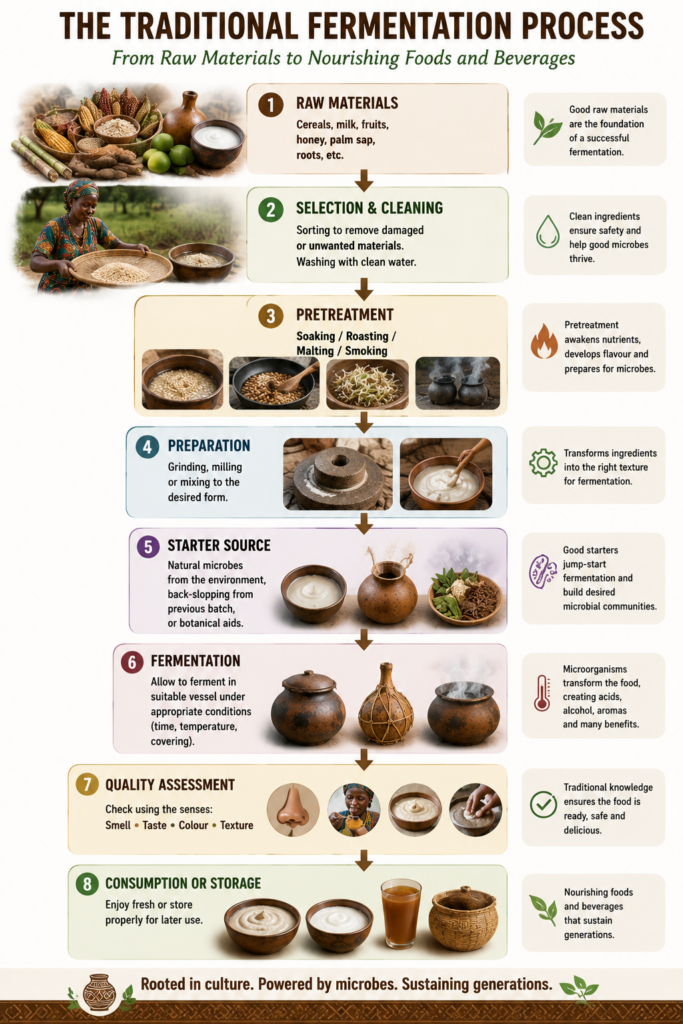
This generalized process illustrates how indigenous communities integrated multiple technologies into a single fermentation system.
13. Threats to Indigenous Fermentation Technology
Despite its importance, traditional fermentation faces numerous challenges.
Loss of Indigenous Knowledge
Many skilled practitioners are elderly, and traditional knowledge is often transmitted orally. As fewer young people learn these practices, valuable techniques risk disappearing.
Urbanization
Urban lifestyles favour convenience foods, reducing the routine preparation of traditional fermented products.
Changing Diets
Imported and highly processed foods increasingly replace indigenous cereals and traditional beverages.
Declining Cultivation of Traditional Crops
Finger millet, pearl millet, and sorghum are being replaced by maize and other crops in many regions, reducing the availability of raw materials for traditional fermentations.
Loss of Traditional Utensils
Clay pots, gourds, wooden vessels, and traditional grinding equipment are increasingly replaced by plastic and stainless-steel containers, altering fermentation characteristics.
Climate Change
Changes in rainfall patterns, temperature, and biodiversity affect the availability of traditional crops, medicinal plants, fermentation aids, and wild microbial communities.
Looking Ahead
Traditional fermentation is far more than an ancient preservation method. It is an indigenous biotechnology that combines microbiology, ecology, engineering, chemistry, and generations of cultural knowledge. Understanding and preserving these systems offers opportunities not only for safeguarding Kenya’s culinary heritage but also for developing healthier foods, resilient food systems, and innovative products inspired by traditional wisdom.
14. Opportunities for Innovation and Commercialization
Traditional fermentation technologies are no longer viewed merely as cultural practices. Around the world, fermented foods are increasingly recognized as premium products because of their unique flavours, nutritional qualities, functional properties, and links to heritage. Kenya’s indigenous fermentation technologies therefore present significant opportunities for value addition, rural development, food security, and international trade.
14.1 Functional Foods
Consumers increasingly seek foods that are:
- Natural.
- Minimally processed.
- Rich in beneficial microorganisms.
- High in nutritional value.
- Free from artificial preservatives.
Many Kenyan fermented foods meet these expectations naturally.
Products such as Ukii, Kinaa, Kirario, Mursik, and traditional fermented beverages could be further developed into functional foods supported by scientific validation.
14.2 Development of Indigenous Starter Cultures
One of the greatest opportunities lies in isolating beneficial microorganisms from traditional fermentations.
Potential applications include:
- Commercial starter cultures.
- Standardized fermentation.
- Improved product consistency.
- Enhanced food safety.
- Reduced fermentation time.
Rather than replacing indigenous methods, starter cultures derived from traditional products would preserve their authentic microbial identity.
14.3 Climate-Smart Foods
Many traditional fermented foods depend upon drought-tolerant crops such as:
- Finger millet.
- Pearl millet.
- Sorghum.
These crops are increasingly important under changing climatic conditions.
Promoting fermented foods therefore also promotes climate resilience.
14.4 Heritage Tourism
Food tourism is among the fastest-growing sectors of global tourism.
Traditional fermentation can become a major attraction through:
- Community food festivals.
- Demonstration centres.
- Living museums.
- Traditional brewing experiences.
- Culinary trails.
- Farm tourism.
Visitors increasingly seek authentic cultural experiences rather than manufactured attractions.
14.5 Small and Medium Enterprises
Traditional fermented foods provide excellent opportunities for local entrepreneurship.
Potential businesses include:
- Ready-to-cook fermented flour blends.
- Refrigerated fermented products.
- Fermented milk products.
- Heritage beverages.
- Premium traditional foods.
- Restaurant franchises.
- Export products.
Appropriate packaging and quality assurance could substantially increase market value.
14.6 Scientific Product Development
Modern food science can improve traditional products without sacrificing authenticity.
Potential innovations include:
- Shelf-life extension.
- Controlled fermentation.
- Improved packaging.
- Nutritional enhancement.
- Food safety validation.
- Freeze-dried starter cultures.
- Functional ingredient development.
The goal should not be to industrialize traditional foods beyond recognition, but rather to preserve their unique characteristics while improving consistency and safety.
15. Research Gaps
Despite considerable progress in the study of fermented foods, many aspects of Kenya’s indigenous fermentation technologies remain poorly understood.
The following areas require urgent scientific attention.
Indigenous Microbial Diversity
Many traditional fermented foods have never undergone modern microbiome analysis.
Questions include:
- Which microorganisms dominate each fermentation?
- How do microbial communities change over time?
- Which microorganisms contribute desirable flavour?
- Which provide health benefits?
Traditional Fermentation Vessels
Almost no comprehensive studies have compared:
- Clay pots.
- Gourds.
- Wooden containers.
- Modern plastic containers.
- Stainless steel vessels.
Their influence on microbial succession, flavour development, and fermentation kinetics remains largely unknown.
Botanical Fermentation Aids
Plants traditionally used during fermentation deserve major scientific investigation.
Examples include:
- Sausage tree (Kigelia africana).
- Medicinal roots.
- Tree barks.
- Aromatic herbs.
- Traditional smoking woods.
Important questions include:
- Do they introduce microorganisms?
- Do they suppress pathogens?
- Which phytochemicals influence fermentation?
- Can they improve product stability?
Indigenous Starter Cultures
Household fermentation systems may contain unique microbial strains with commercial value.
These microorganisms could contribute to:
- Novel starter cultures.
- Functional foods.
- Probiotic development.
- Industrial fermentation.
Nutritional Changes
Further work is needed to determine:
- Vitamin synthesis.
- Protein digestibility.
- Mineral bioavailability.
- Antioxidant development.
- Glycaemic response.
Sensory Science
Traditional quality evaluation relies heavily on sensory perception.
Scientific evaluation should investigate:
- Consumer preferences.
- Aroma chemistry.
- Texture analysis.
- Flavour compounds.
- Regional variations.
Documentation of Indigenous Knowledge
Perhaps the most urgent research priority is preserving indigenous knowledge before it disappears.
Researchers should document:
- Elderly practitioners.
- Traditional terminology.
- Local fermentation methods.
- Songs associated with food preparation.
- Proverbs.
- Ceremonial practices.
- Household variations.
Every community possesses valuable knowledge that deserves preservation.
16. Food Scientist’s Perspective
Traditional fermentation technologies developed in Kenya represent one of Africa’s greatest scientific and cultural achievements.
Although early practitioners lacked microscopes, laboratory incubators, or knowledge of microbial genetics, they successfully manipulated microbial ecosystems through observation, experimentation, and experience accumulated over countless generations.
Modern food science has demonstrated that many indigenous practices—including smoking fermentation vessels, using mature gourds, back-slopping, incorporating botanical fermentation aids, and carefully selecting fermentation vessels—have sound scientific foundations.
Rather than viewing traditional fermentation as primitive food preparation, it should be recognized as an advanced indigenous biotechnology. These technologies embody principles now central to modern microbiology, food preservation, microbial ecology, sensory science, and nutrition.
Future research should therefore pursue two complementary goals:
- Scientifically validate indigenous fermentation practices using modern analytical techniques.
- Preserve the cultural knowledge, languages, and traditions that created these remarkable technologies.
Traditional fermentation is not simply part of Kenya’s past—it has an important role to play in the future of sustainable food systems, functional foods, climate resilience, and heritage preservation.
17. Interesting Facts
- Fermentation is one of humanity’s oldest forms of biotechnology.
- Every Kenyan community practices at least one form of traditional fermentation.
- Traditional gourds and clay pots often function as natural starter culture reservoirs.
- Smoke was traditionally used not only for flavour but also to influence microbial communities.
- The sausage tree (Kigelia africana) plays an essential role in the production of Muratina and Kaluvu.
- Many fermented foods improve mineral availability by reducing phytate levels.
- Indigenous fermentation technologies were developed centuries before microorganisms were discovered.
- Several traditional fermented foods can remain safe for consumption for days without refrigeration because of acidity, microbial competition, and alcohol production.
- Kenya possesses one of Africa’s richest and most diverse collections of indigenous fermented foods.
18. References
Abegaz, K. (2007). Isolation, characterization and identification of lactic acid bacteria involved in traditional fermentation of borde, an Ethiopian cereal beverage. African Journal of Biotechnology, 6(12), 1469–1478.
Amwoma, L. M., Ebere, R., & Arimi, J. (2022). Impact of fermented milk on the glycemic response of maize, millet and sorghum stiff porridges. African Journal of Science, Technology and Social Sciences, 1(1). https://doi.org/10.58506/ajstss.v1i1.25
Kalui, C. M., Mathara, J. M., Kutima, P. M., Kiiyukia, C., & Wongo, L. E. (2008). Partial characterisation and identification of lactic acid bacteria involved in production of ikii: A traditional fermented maize porridge by the Kamba in Kenya. Journal of Tropical Microbiology and Biotechnology, 4(1), 3–15. https://doi.org/10.4314/jtmb.v4i1.35461
Khayeka-Wandabwa, C., Choge, J. K., Linnemann, A. R., & Schoustra, S. (2024). Linking Fermented Foods to Microbial Composition and Valorisation: Blueprint for Kenya. Food Reviews International. https://doi.org/10.1080/87559129.2024.2355992
Kunyanga, C. N., Mbugua, S. K., Kang’ethe, E. K., & Imungi, J. K. (2009). Microbiological and acidity changes during the traditional production of Kirario: An indigenous Kenyan fermented porridge produced from green maize and millet. African Journal of Food, Agriculture, Nutrition and Development, 9(6), 1419–1435. https://doi.org/10.4314/ajfand.v9i6.46261
Nout, M. J. R. (1981). Aspects of the manufacture and consumption of Kenyan traditional fermented beverages. Wageningen University. https://doi.org/10.18174/205798
Slow Food Foundation for Biodiversity. Bulrush Millet (Uwele, Mawele, Mwele, Miwele). https://www.fondazioneslowfood.com/en/ark-of-taste-slow-food/bulrush-millet/
Slow Food Foundation for Biodiversity. Kaluvu (Kimee). https://www.fondazioneslowfood.com/en/ark-of-taste-slow-food/kimee-or-kaluvu/
Slow Food Foundation for Biodiversity. Ucuru wa Mukio. https://www.fondazioneslowfood.com/en/ark-of-taste-slow-food/ucuru-wa-mukio-traditional-fermented-porridge/
Wafula, E. N., Muhonja, C. N., Kuja, J. O., & Owaga, E. E. (2022). Lactic acid bacteria from African fermented cereal-based products: Potential biological control agents for mycotoxins in Kenya. Journal of Food Quality, 2022, Article 2397767. https://doi.org/10.1155/2022/2397767
World Health Organization & Food and Agriculture Organization of the United Nations. (2006). Probiotics in Food: Health and Nutritional Properties and Guidelines for Evaluation. FAO Food and Nutrition Paper No. 85.